In most kitchens, a microwave and a toaster oven are everyday essentials. Both are convenient, but they work in different ways.
Toaster oven vs. microwave: Which is better?
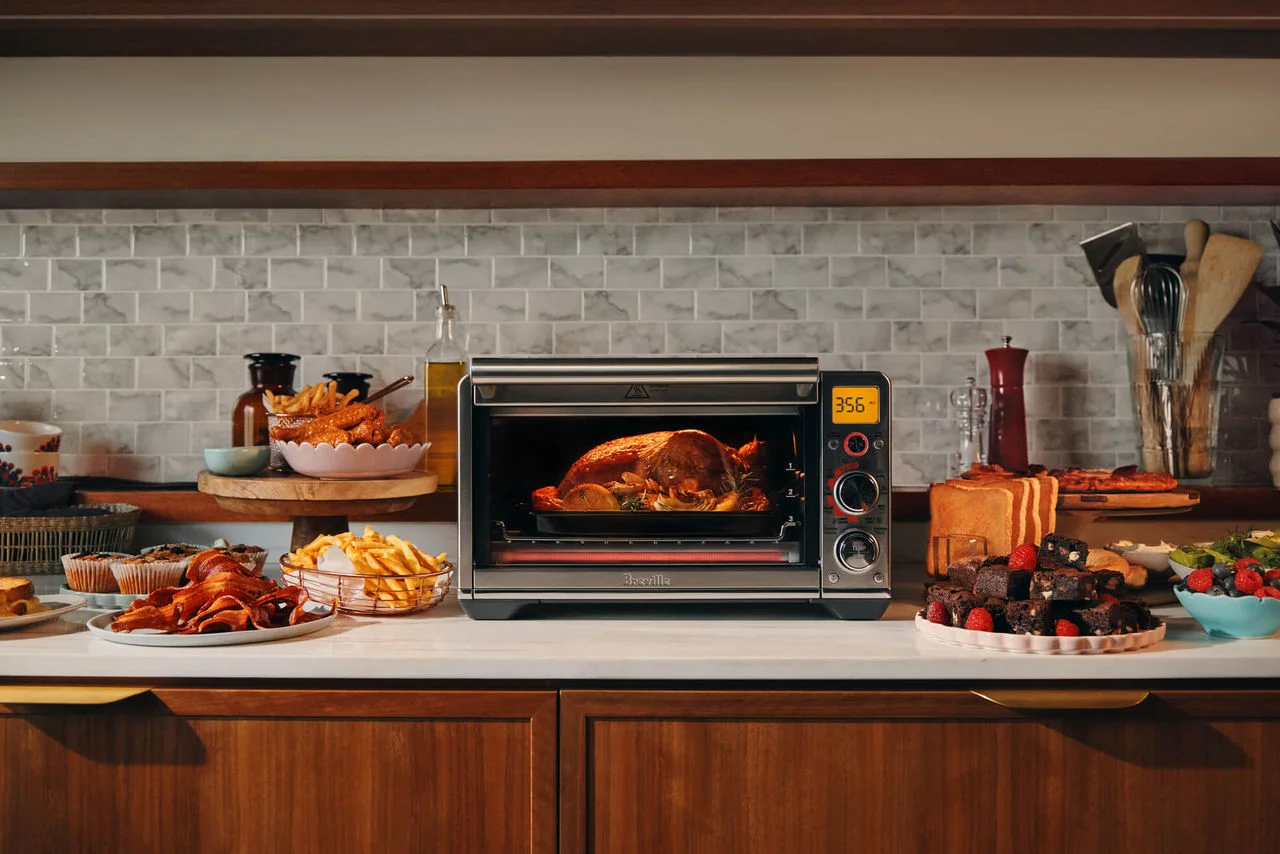
Understanding those differences helps you decide which appliance matches your cooking habits. This toaster oven vs. microwave comparison highlights the key factors to help you choose the appliance that best suits your kitchen.
How do toaster ovens and microwaves heat food differently?
Heating is where these appliances differ most. Both cook food, but the method of heating changes the texture and flavor you get.
Toaster oven heating method
A toaster oven relies on heating elements, similar to a conventional oven, but is designed for smaller portions. These electric coils radiate direct heat, making it possible to toast bread evenly, crisp pizza crusts, or broil fish. Because the heat surrounds the food, results often resemble traditional baking and roasting.
Microwave heating method
A microwave oven uses electromagnetic waves to excite water molecules in food. This process heats food quickly from the inside out, which makes it excellent for reheating leftovers or defrosting frozen items in minutes. The limitation is texture since microwaves don’t brown or crisp, so meals can come out soft rather than golden.
Cooking speed and convenience
When speed matters, the microwave is hard to beat. It requires no preheating, and tasks like reheating soup or steaming vegetables can be done in just a few minutes. That makes it a must-have tool for quick meals or late-night snacks.
Toaster ovens, on the other hand, take a little more time to preheat. Once ready, they can toast bread, bake cookies, or roast small batches of vegetables. They can’t match the microwave for quick reheating, but they provide better cooking quality. For anyone doing meal prep for the week, the ability to bake or roast smaller portions without turning on a full oven is a clear advantage.
Energy use and efficiency
Microwaves are generally more energy efficient because they heat food quickly. Shorter cooking time means less electricity is used overall, which is why many households rely on a microwave oven for reheating and other simple tasks.
Toaster ovens often require more energy because they cook for longer periods. Still, they use far less than a full-size conventional oven, making them practical for small-batch cooking. Many modern toaster oven models now feature convection settings, which allow hot air to circulate, reducing cooking time and lowering energy consumption. This results in outcomes similar to those achieved cooking with a convection oven, but in a smaller format.
Cooking quality and versatility
If cooking quality is your priority, the toaster oven often delivers better results. The dry heat from the coils creates crisp textures, melted cheese sandwiches, and evenly browned food. It’s also suitable for baking, broiling, air frying, and roasting, which makes it one of the most versatile appliances you can keep on the countertop.
Microwaves are better for speed and convenience. They excel at reheating and defrosting, making them practical for cooking food that doesn’t require crisping, such as oatmeal, steamed vegetables, or defrosted chicken. While they may leave bread soggy or pizza soft, they’re still indispensable for anyone who values fast results.
Cooking quality and versatility
If cooking quality is your priority, the toaster oven often delivers better results. The dry heat from the coils creates crisp textures, melted cheese sandwiches, and evenly browned food. It’s also suitable for baking, broiling, air frying, and roasting, which makes it one of the most versatile appliances you can keep on the countertop.
Microwaves are better for speed and convenience. They excel at reheating and defrosting, making them practical for cooking food that doesn’t require crisping, such as oatmeal, steamed vegetables, or defrosted chicken. While they may leave bread soggy or pizza soft, they’re still indispensable for anyone who values fast results.
Which appliance suits you best
Ultimately, the appliance that works best depends on your cooking style. If speed and convenience are the top priorities, a microwave is the clear choice. If you prefer crisp textures, golden browning, or the flexibility to bake, a toaster oven delivers better results. And for those who don’t want to choose between the two, a toaster oven microwave combo provides both functions in one unit. Each option has strengths, and many kitchens benefit from using both—one for quick reheating and the other for oven-style cooking in a compact space.
Upgrade your kitchen with Breville
Breville’s Smart Ovens® make the toaster oven an indispensable part of modern kitchens. With faster preheat, multiple cooking modes, and precise temperature control, they’re designed for flexibility. Features like convection air circulation and even heating elements help food cook evenly, whether you’re toasting bread, baking pizza, broiling salmon, or reheating leftovers.
For anyone weighing toaster oven vs. microwave comparisons, Breville also offers a line of microwaves that deliver the same high quality with premium touches. They’re built for speed and simplicity without sacrificing consistent results.
For even more versatility, the Combi Wave 3‑in‑1 combines microwave technology with built‑in Air Fry and Roast functions—so you can crisp, brown, and reheat in one countertop appliance.
With the right kitchen appliances, everyday cooking becomes easier, faster, and more consistent.
Sources:
1. Better Homes & Gardens. How to Use a Toaster Oven to Roast, Toast, Bake, and More. https://www.bhg.com/how-to-use-a-toaster-oven-7093783
2. FDA. Microwave ovens. https://www.fda.gov/radiation-emitting-products/resources-you-radiation-emitting-products/microwave-ovens
3. ScienceDirect. Microwave cooking. https://www.sciencedirect.com/topics/agricultural-and-biological-sciences/microwave-cooking