Deciding between an immersion blender and a food processor might seem straightforward—until you're mid-recipe, elbow-deep in ingredients, and questioning which tool gets the job done faster (and cleaner).
Deciding between an immersion blender and a food processor might seem straightforward—until you're mid-recipe, elbow-deep in ingredients, and questioning which tool gets the job done faster (and cleaner).
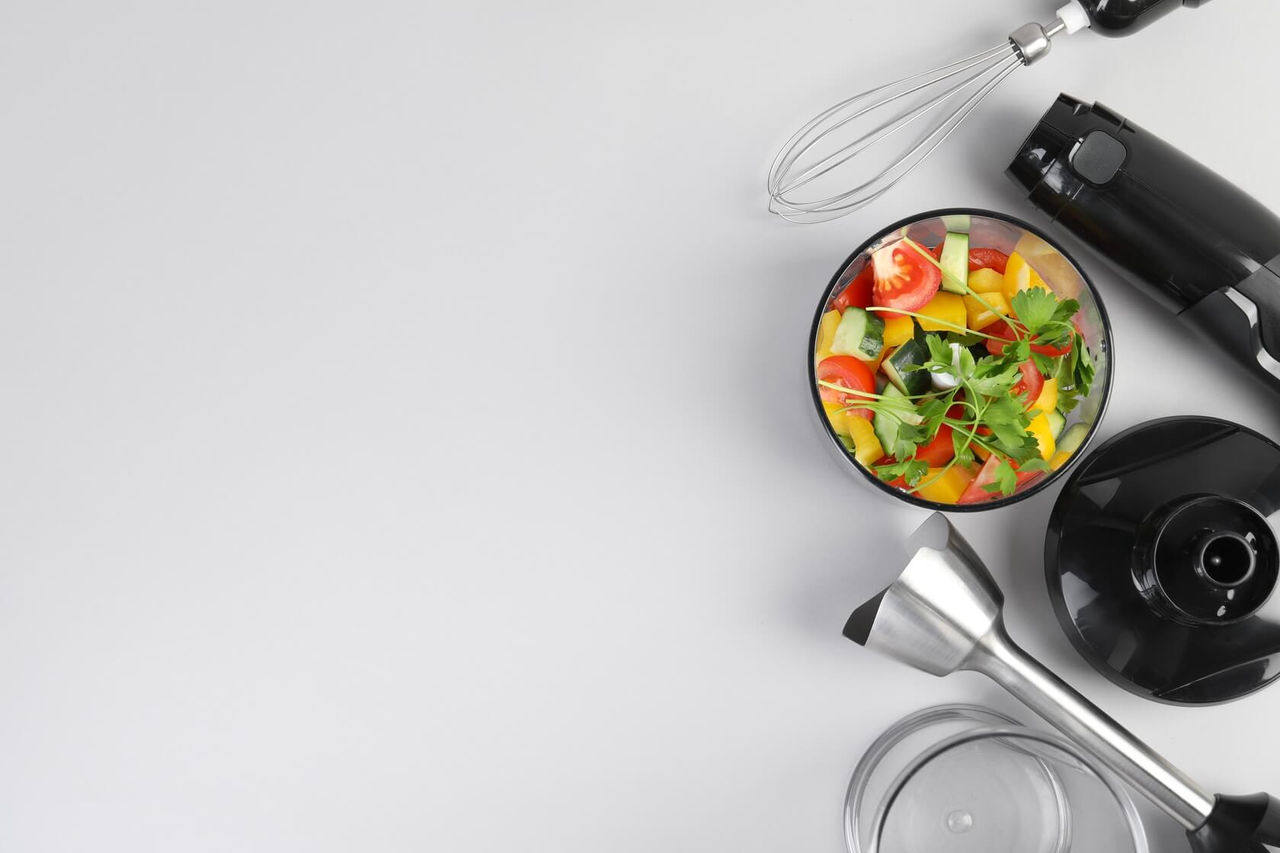
While both appliances offer versatility and speed, they’re designed for different types of kitchen tasks. Understanding the differences between an immersion blender vs food processor can help you make smarter choices when it comes to blending, chopping, pureeing, and beyond.
Both tools aim to simplify prep work, but how they operate—and what they excel at—varies considerably.
Immersion blenders, also known as stick blenders or hand blenders, are handheld appliances designed for blending directly in a pot, bowl, or cup. They're ideal for working with liquids and softer ingredients, using spinning blades to create a vortex that pulls food inward and creates smooth results. Many models offer variable speed control and blender settings, giving users more control over consistency.
Food processors, by contrast, offer higher wattage and can tackle a wider range of tasks—from chopping onions and shredding cheese to mixing dough or slicing vegetables. These appliances usually come with multiple blades and discs, each built for a specific function. If you're dealing with nuts, dense produce, or stiff mixtures like nut butter, the powerful motor of a food processor gives you the edge.
A key difference in the immersion blender vs. food processor debate is how much you want to make in one go. Immersion blenders are well-suited for small batches and single servings, like whipping cream or emulsifying a vinaigrette, while food processors are built to handle a lot more at once.
Depending on food processor sizes, bowls typically range from 3 to 14 cups. For this reason, food processors stand out for handling larger volumes with ease.
Both tools can come with a variety of attachments, but food processors typically win on versatility. Many models include slicing discs, shredding blades, and even dough hooks. That makes them useful for a wider variety of cooking tasks, like mixing, slicing, and chopping.
Some immersion blenders also come with attachments, such as a whisk, chopper, or mini food processor bowl, offering added functionality for smaller tasks like chopping herbs or prepping soft ingredients. While these attachments can stand in for some food processor tasks, they lack the precision and power of a full-size model, particularly when it comes to dense textures or fine slicing.
Choosing the right tool often depends on what recipes you make most often and how you use your kitchen space.
If your go-to meals include smoothies, soups, or sauces, the immersion blender is likely your best bet. It can puree vegetables directly in the pot, eliminating the need to transfer hot liquid to a countertop blender—a task that’s both messy and risky. It’s also compact, quick to deploy, and great for last-minute prep.
The stick blender creates smooth, consistent textures with minimal cleanup for creamy tomato soup, green smoothies, or fresh pesto.
✔ Use an immersion blender when you want control, convenience, and clean-up speed in smaller batches.
If your meals involve a lot of prep—think chopped vegetables, shredded cheese, or kneaded dough—a food processor delivers the kind of all-in-one solution many home chefs appreciate. Its capacity and range of attachments make it the go-to for tasks that require power and precision.
Need to slice zucchini for a gratin, chop onions for a stir-fry, or mix pastry butter without melting it? A food processor handles it all efficiently, with cutting consistency that’s tough to match by hand.
✔ Use a food processor when you're working with firm textures, dry mixes, or prepping larger meals.
Beyond performance, consider your available space and the time you're willing to spend on maintenance.
Immersion blenders are ideal for small kitchens or minimalists who don’t want another large container taking up cabinet space. They’re slim and often come with a compact bowl or cup for single-use prep.
Food processors, while more versatile, require more space. Even models with smart nesting options still take up a notable footprint, especially if you're storing extra blades and attachments.
The immersion blender vs. food processor comparison also matters at the sink. Immersion blenders usually consist of two parts: the motorized hand unit and the detachable blending arm. Rinse the blades, wipe the motor, and you’re done. Some models are even dishwasher-safe.
Food processors require more post-prep effort. Disassembling multiple components—the bowl, lid, feed chute, and blades—and scrubbing food residue from all the crevices can be time-consuming. That said, most high-end appliances today are designed to be easy to clean and assemble.
Before you decide which tool earns a spot in your kitchen, it helps to consider more than just features. Your cooking habits, available space, and long-term needs all play a role in making the right choice.
Think about what you cook most often and what slows you down. If your daily recipes involve hot liquids, soft vegetables, or light cream sauces, the immersion blender is a simple solution. If you’re constantly prepping dense ingredients, slicing, or kneading, you’ll get more from a food processor blender hybrid or full-sized processor.
Also consider the texture you’re trying to achieve: smooth vs. chopped, pureed vs. shredded. No one tool does it all equally well.
Higher-end appliances from brands like Breville often include advanced controls, powerful induction motors (in the case of their food processors), and interchangeable attachments that expand functionality. This motor design offers greater torque and durability than the AC/DC motors typically found in immersion blenders.
If you cook regularly, investing in both can make sense. Still, for casual cooks, choosing one over the other based on your most frequent needs can save both money and space.
The immersion blender vs food processor question comes down to use case and frequency. You don’t necessarily need both, but if you cook often and enjoy a wide range of recipes, each tool brings something unique to the table. One excels at blending and puree work, the other handles prep, chopping, and dough.
For some, an advanced blender food processor combo might offer the best of both worlds. Breville offers thoughtfully designed kitchen appliances in both categories, making it easier to choose a model that aligns with your cooking style. But for most home cooks, selecting the right tool is about matching functionality with your day-to-day kitchen routine.
Sources:
1. Consumer Reports. How to Use an Immersion Blender. https://www.consumerreports.org/appliances/blenders/how-to-use-an-immersion-blender-a1108257297/