How do juicers work?
“Juicer” is actually a shorthand for “juice extractor.” The most elemental kind of juicer is the reamer, a manual tool you may have seen in your grandparents’ kitchen. Reamers are used by pressing citrus fruits like orange, grapefruit, or lemon against a corrugated, cone-shaped mandrel to extract the fresh juice from the fruit.
As culinary technology has advanced, we’ve developed far more efficient and sophisticated methods of extracting juice from our favorite fruits (and moved well beyond the zesty world of citrus).
Today, there are two main types of electrical home juicers you’ll find on the market: centrifugal juicers and cold-pressed juicers.
Centrifugal juicers
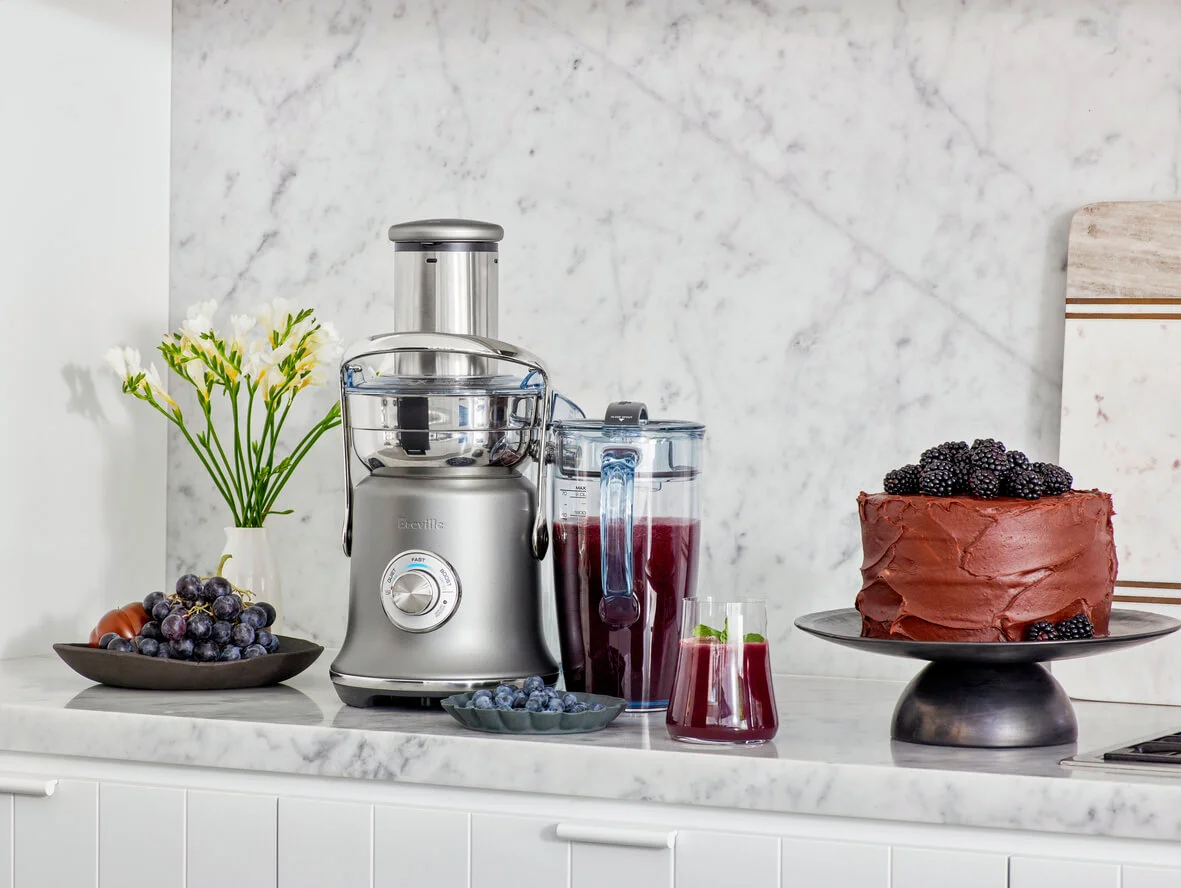
A centrifugal juicer (also called a fast juicer) is the juice enthusiast’s best friend in speed and economy. These juicers work quickly to grind up the fruits and vegetables you add, pressing their pulp against a filter to collect their juices.
Centrifugal juicers are prized for:
● Producing fast extractions from most fruits and vegetables
● Being more affordable than their cold-press cousins
● Being ideal for people who are new to juicing
That said, fast juicers’ capabilities aren’t quite as advanced as slow juicers. If you were to test them against each other, you’d probably find that they produce a degree more foam or separation than cold-pressed juices. However, they’re still an excellent entry point to juicing if you’ve never owned a juicer before.
Cold-pressed juicers
Cold-pressed juicers, masticating juicers, slow juicers—whatever you call them, this type of electrical cold press juicer is arguably the best to use when you’re serious about making juicing a regular part of your domestic routine.
A masticating juicer or cold press juicer works by gradually pulverizing the vegetables and fruits and then separating the cold-pressed juice from the fiber (better known as “pulp”). There are several advantages to using this juicing device:
● A slow juicer typically produces a 30% higher juice output than its centrifugal siblings
● The nutrients in fruits and vegetables aren’t as likely to oxidize in a cold-pressed juice
● You’ll get less foam in your yield
Slightly less heat generated as food is processed compared to some models of centrifugal juicers
● Are best suited for making wheatgrass juice
If your priority is to make the highest-possible quality juice in your kitchen, a cold-pressed juicer may be for you.
How do blenders work?
There are different types of blenders available on the market today, but the two primary types are:
● Immersion blenders – What is an immersion blender you may ask? Immersion blenders look like portable wands with a bladed head and are primarily used for blending soups, though they can be much more useful when used with attachments as a mini food processor, potato masher, whisking and more.
● Countertop blenders – These consist of a blending container and a blender base, and they operate upright. They have high powered motors that can whip through the toughest foods and some can even mill grains into flour.
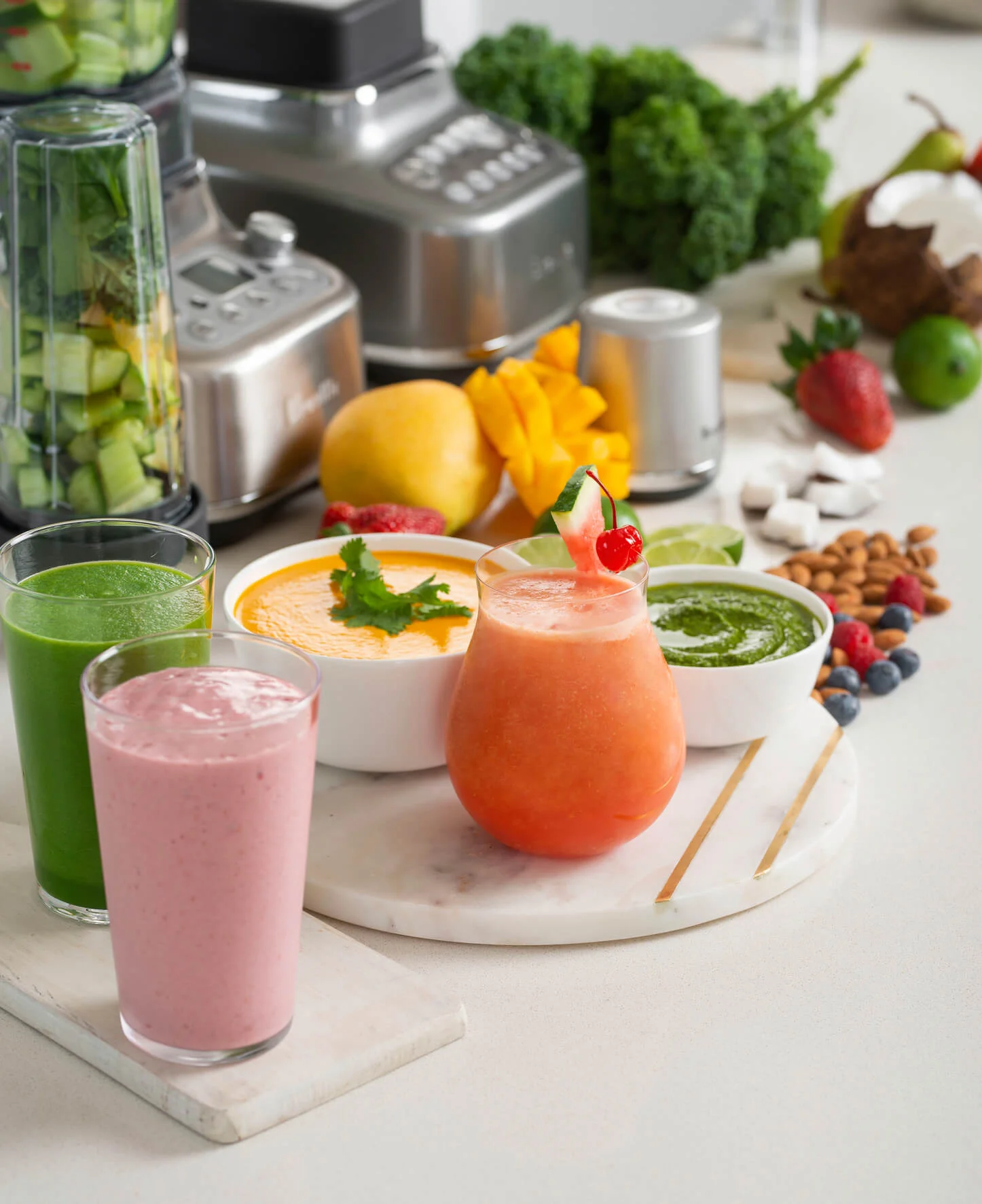
Both types of blenders work to emulsify ingredients, but countertop blenders have a much wider variety of uses and applications. Yes, they’re an ideal kitchen companion on occasions when you’re craving something light and nourishing—that velvety beverage we know as the smoothie—but they can also be used to make:
● Dips, spreads, and hummuses
● Soups
● Homemade nut butters
● Homemade alternative milks
● Homemade flours
You can learn how to use a blender in so many different ways. But no matter what you use them for, today’s premiere countertop blenders boast a host of features that make blending a breeze. Designs to look for include:
● High powered motors – Previous blender generations took longer to stir up their yields. These days, more powerful motors make whipping up a perfectly smooth smoothie (and other recipes) a much more rapid, efficient process.
● Advanced blender settings – An overripe banana won’t blend the same way a few knobs of ginger will. For this reason, the most advanced countertop blenders today sport a variety of programs engineered to target specific recipes, fruits, and veggies, or other add-ins, like ice cubes.
● Noise control – For some people, nothing sounds better than a tangy, airy smoothie to wake up in the morning—except, perhaps, the sound of making a smoothie. Many models today are built with noise suppression technology so users can blend at a decibel that won’t kill their morning peace.
What’s the difference between blenders and food processors?
Food processors were invented to automate some of the more cumbersome (and at times energy-intensive) tasks involved in cooking. They also help chefs to achieve consistency in their recipes, which can be difficult to achieve manually. Food processors are most often used to:
● Quickly chop up fruits, vegetables, and nuts
● Whip up condiments like salad dressing or pesto
● Slice foods to even thicknesses, rapidly
● Grating large amounts of cheeses and foods
● Dicing perfectly sized cubes, rapidly and evenly
● Create versatile confectionary staples (e.g. pie dough)
The main difference between blenders and food processors is that, while blenders need fluids to help finely blend the ingredients you put into them, food processors can work with dry ingredients and will not pulverize food to as fine a texture.
To blend or to juice: Which should you choose?
Blenders and juicers were created for distinct reasons, and they can help you create completely distinct beverages.
If you love enjoying a perfectly frothed smoothie and you’re a devoteé of fresh-squeezed fruit and veggie juice, it’s probably best to keep both in your culinary artillery. However, if you must choose the best appliance for your kitchen counter, considering a few factors in the debate of juicer vs blender can help you decide which fits your lifestyle best.
Juicers vs. blenders: Health & wellness
Both juices and smoothies can be an excellent addition to any wellness regimen. Juices may be used as a supplement to round out your diet; meanwhile, a nourishing smoothie balanced with good fats, carbohydrates, and protein can even work as a light meal or snack.
For this reason, neither a juicer nor a blender is superior for ensuring you stay healthy—it’s more important to consider your wellness goals or any conditions you’re currently living with.
Juicers vs. blenders: versatility
Countertop blenders are the jack of all trades of every kitchen, and while juicers do what they do well, they can strictly be used to make juice.
If you take pride in your cooking and love spending time experimenting with different recipes at home, a blender may be the superior option. Plus, there are plenty of ways people use their blenders creatively, like using it to:
● Mix eggs for a large batch of scramble
● Make nut butters
● Finely grind spices and mill flours
● Make homemade pureés to use as baby food
That said, if your first priority is to make juicing a staple in your lifestyle, go for the juicer. While it’s possible to pulverize produce in a blender and use a cheesecloth to strain out the juice, it’s a messy, tiring process that’s likely to leave you with an inconsistent product.
Juicers vs. blenders: Maintenance
Juicers and blenders do require some maintenance to keep your machines performing at their best. However, juicers are known to be slightly more high maintenance. Blenders clean up in a breeze with just a pump of soap and some water, blended on high (luckily with Breville, there’s a one-touch button for that!). With juicers, the filters must be cleaned and lightly scrubbed after every use.
Fortunately, those who want to add a juicer to their kitchen can cut down on cleaning time by looking for designs that have quick rinse technology to reduce the time you spend on cleanings.
Juicers vs. blenders: Budget
Costs vary widely in both the blender and the juicer market. At the time of writing this article, the best models cost somewhere between:
● Blenders – $100 and $600
● Juicers – $100 and $500
If you want to save while packing even more versatility into your chosen appliance, you might consider looking into a fresh juice blender hybrid called a bluicer.
That said, if you’re deciding between juicers or blenders, it’s likely because you want to make certain recipes more accessible in your own home. Given the popularity of both smoothies and juices, it’s relatively easy to find them on the go—but making them in your kitchen could save you money in the long run. Plus, you’ll enjoy the fun and freedom to blend (or extract) whatever your palate craves at a moment’s notice.
Breville: Whip fruits and veggies into shape, your way
Breville kitchen appliances are built for usability and control, and with designs you’ll be proud to spotlight on your kitchen counter. You can get amazing, restaurant-quality results at home while still looking great on your counter.
Whether you’re beginning to develop your culinary skill set or just want to create healthy, delicious dishes on your own turf, Breville’s juicers, blenders, and bluicers are trusted by professionals and home cooks across the country. Discover more of what your kitchen is capable of by exploring the full range today.
Sources:
The Kitchn. What’s The Difference Between Juices and Smoothies? https://www.thekitchn.com/whats-the-difference-between-juices-and-smoothies-228940
Los Angeles Times. Collectors Gather : So What’s a Reamer? One Juicy Hobby.
https://www.latimes.com/archives/la-xpm-1987-08-08-me-376-story.html
Tom’s Guide. Masticating vs centrifugal juicer: Which is best? https://www.tomsguide.com/news/masticating-vs-centrifugal-juicer-which-is-best
HuffPost. Juicer Types: The Difference Between Cold Press Juicers vs. Centrifugal Juice Extractors. https://www.huffpost.com/entry/juicer-types-cold-press_n_2618000
Tom’s Guide. Masticating vs centrifugal juicer: Which is best? https://www.tomsguide.com/news/masticating-vs-centrifugal-juicer-which-is-best
Real Simple. 5 Ways Your Blender Can Save You Time in the Kitchen. https://www.realsimple.com/food-recipes/tools-products/appliances/blender-uses
Eat Me Daily. Natural History of the Kitchen: Food Processor. https://web.archive.org/web/20100607075049/http://www.eatmedaily.com/2010/06/natural-history-of-the-kitchen-food-processor/