The electric kettle and stovetop kettle share similarities, but they also have distinct differences. Deciding which model is best for you depends on personal preference, desired aesthetic, and kitchen needs.
Keep reading if you’re curious about kettles but unsure which to buy. This comprehensive guide offers a full breakdown of electric vs. stovetop kettles, including their design origins, their inner workings, and the benefits and drawbacks of each.
Introduction to kettles
The kettle may be the most recognizable appliance in the kitchen today. Perhaps it’s because it has been serving up hot water in homes since 3500 BC: the Bronze Age brought about the invention of the wheel—and the kettle.
Even in its earliest form, none could mistake the kettle’s sophisticated gooseneck spout and easy, open-lid design. But as kitchen spaces developed, the kettle retained its signature shape but saw moderate updates to its manufacturing materials. In 18th-century Europe, the kettle was crafted from iron, and for 19th-century American cowboys? Well, they preferred copper.
Regardless of its make, the kettle consistently featured four key components that made it safe and effective:
● An open lid to easily add water
● A top handle to reduce burns when handling
● A curved spout that expertly funneled hot water
● Materials that could retain heat and withstand the intensity of an open flame
For thousands of years, the kettle maintained this model and boiling method. That is, until the electric kettle graced countertops.
By 1891, innovative minds were already developing a plug-in kettle intended for cooking convenience, but it consisted of two separate compartments and took up to twelve minutes to boil water.
The design wasn’t perfected until 1920 when the Swan Company devised a submersible electric heating element that would define this appliance.2 When electricity became widely available in American homes by 1945, the electric kettle superseded its open flame predecessor to become the ultimate household accessory.
In modern kitchens, the choice between a stovetop kettle and an electric kettle often comes down to factors like convenience, energy efficiency, and temperature control for specific brews.
Electric kettles are unmatched when it comes to heating water quickly and efficiently. They use electricity to heat the water directly, reducing heat loss and making them more energy-efficient compared to stovetop kettles.
Exploring electric kettles
With modern lines and minimalist design, the electric kettle of today may be a must-have for any contemporary kitchen. While it’s less prevalent in American homes, the electric kettle is still prized for its convenience, safety, and sustainability. As you explore the best kettle option for your kitchen space, keep in mind three key considerations for each model.
How electric kettles work
Boiling water might be the most basic kitchen task—most don’t think twice about how it's done. The adage rings true: a watched pot never boils, so you put the kettle on, walk away, and wait for the whistle. Or in the case of the electric kettle, the familiar “click!”
But considering how the electric kettle works might be the first step to deciding if it’s right for you. It boils down to expert engineering:
● Inside each kettle is a heating element, usually a coil
● The heating element is made of resistant material that converts electricity into heat
● When water comes in contact with the coil, it begins to boil
● An internal thermostat measures the temperature of the water
● When the water reaches the right temperature, the kettle automatically turns off
Benefits of electric kettles
The electric kettle is an easy and efficient kitchen tool—with only an outlet and a few minutes to spare, boiling water is a button press away. But its no-nonsense functionality isn’t the only perk of this appliance. Additional benefits include:
A simple design – A removable pitcher with a vertical design and easy-to-grasp side handle for optimal mobility around the kitchen.
Speed – When you’re running out the door in the morning, a cup of green tea is an arm’s reach away—most electric kettles boil water faster than a stovetop kettle.
Safety – An automatic shut-off switch prevents water from boiling dry and can be a deterrent to household accidents.
Sustainability – An electric kettle is often more sustainable, using 10% less energy than a stovetop kettle. Not to mention, electric kettles often feature energy-efficient designs that minimize heat loss during the heating process.
Convenience – For coffee makers and tea enthusiasts who need precise temperature control for brewing various beverages, the electric kettle's advanced features are unmatched.
Potential drawbacks of electric kettles
The electric kettle may be a modern marvel, but based on your cooking needs and kitchen space, it can have a handful of potential drawbacks:
● An electric kettle can take up coveted counter space in a compact kitchen
● As this kettle relies on electricity, it won’t work during a power outage
● If the kettle’s components are damaged or become waterlogged, it is difficult to fix
Now that you’re an expert on electric kettles, let’s switch burners and explore its predecessor: the stovetop kettle.
Exploring stovetop kettles
The sight and sound of a stovetop kettle in the kitchen likely summons similar impressions of home: company calling or cozy Autumn evenings curled on the couch.
Stovetop kettles are often made of durable materials like stainless steel, which ensures longevity even with frequent use on a gas or electric stove.
How stovetop kettles work
The inner workings of the stovetop kettle are a tad more intuitive than the electric kettle. Here’s the simple science behind your cup of tea:
● The kettle is placed on an active stovetop
● Made of heat-resistant materials, the kettle remains hot but intact while the water heats
● Boiling water in the kettle’s basin creates pressure
● Pressure converts to steam that releases a high-pitched whistling sound
● When removed from the stovetop, the water cools and is ready to pour
Benefits of stovetop kettles
The stovetop kettle is no doubt a humble human invention. But there’s a reason its design hasn't deviated much from its ancient origins. Benefits of stovetop kettles include:
● Simple and sturdy designs ensure the stovetop kettle is long-lasting
● It saves space by maintaining its place on your stove
● Stovetop kettles are easy to clean
● They can maintain a rolling boil for all-day coffee or tea
Potential drawbacks of stovetop kettles
Like its electric counterpart, the stovetop kettle boasts its benefits but has some potential drawbacks too:
● Stovetop kettles are slow to boil
● They’re less energy efficient
● They lack temperature control
Comparing electric and stovetop kettles
Sometimes, the best way to make an informed decision is to conduct a thorough side-by-side comparison, especially when it comes to appliances.
Don’t worry, you don’t have to purchase an electric kettle and a stovetop kettle to size them up. We’ve done the comparing and contrasting for you.
Heating speed and efficiency
The efficiency of a stovetop kettle depends on the stove. Different types of stoves use various amounts of energy, but whether your stove is gas or electric, most of the energy it takes to boil water gets lost to heating the air around it.7 In the race to boil water, it’s energy loss that ultimately slows the stovetop kettle down and makes it less sustainable at about 70% efficiency.
An electric kettle uses energy too, but most electric kettles are well-insulated, so they lose less energy and retain more heat. With built-in heating coils, the electric kettle boils water more quickly. It wins out on sustainability as well, coming in at around 80% efficiency.
Convenience and usability
With its faster boiling time, transportable design, and additional features, the electric kettle is quite convenient for the multi-tasking tea drinker. However, if your kitchen lacks available outlets, or you’re sacrificing usable counter space for style, the stovetop kettle may be the most space-efficient option for your kitchen.
Durability and longevity
An intelligently designed electric kettle that’s well cared for can last for years. However, overuse, design issues, and general wear and tear can lead to disrepair. Their electrical components can also make these kettles vulnerable to water damage, shortening their lifespan.
In comparison, a stovetop kettle proves more durable with its simple design and tough materials, but frequent cleaning might be necessary to prevent mineral deposits and build-up.
Aesthetic and design considerations
Optimizing your cooking space isn’t only about outfitting it with state-of-the-art appliances—a carefully curated kitchen considers the design elements and unique aesthetic of each appliance, too.
Does your kitchen reflect the best of traditional style? Perhaps it features neutral colors, flagstone flooring, and hand-crafted shaker cabinets. If that’s the case, consider a stovetop kettle to add to its cozy and classic appeal.
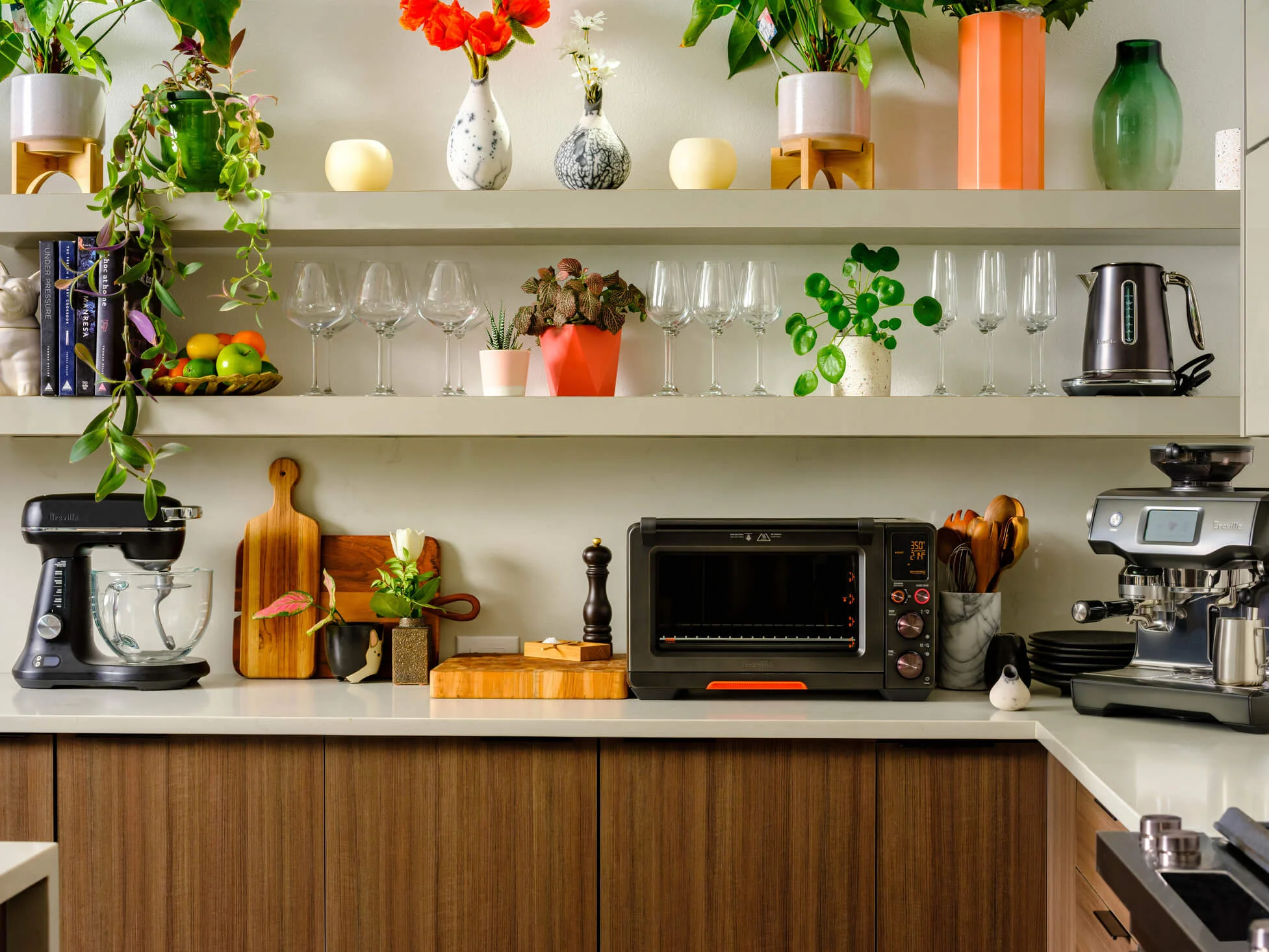
On the other hand, maybe your kitchen space feels more contemporary and sleek with clean lines, a bold color palette, and marble countertops. With an island that complements ample counter space, an electric kettle might be the perfect pairing with your modern, minimal space.
Choosing the right kettle for your needs
Features and functionality are important considerations when choosing between an electric kettle and a stovetop kettle. But don’t stop there—to make the most informed choice, consider your kitchen space and cooking needs, too.
Consider your kitchen setup
If your kitchen features ample space and a bare countertop or two, the electric kettle is the perfect centerpiece for a dedicated tea corner.
But if your kitchen is compact and lacks counter space, the stovetop kettle may be the ideal solution to maintaining a clean and airy cooking space.
Consider your daily usage
If you enjoy multiple cups of tea throughout the day or frequently use hot water to bring your cookbook to life, the energy-efficient and quick-to-boil electric kettle offers several servings of hot water in one session. Many electric kettles also feature temperature control settings, so you can get specific with each recipe and brew.
However, if you make your morning drinks through other means like an espresso machine or a juicer, and only use boiling water intermittently, then the stovetop kettle may work for you.
Find the perfect kettle for your kitchen space with Breville
Despite its compact size, welcoming a new kettle into your kitchen is no small task. Like any addition to your home, your kettle choice can affect the look and feel of your kitchen, your carbon footprint, and even how quickly you can satisfy your need for a cup of tea.
Luckily, Breville is here to help. Our collection of tea makers features variable temperature settings with multiple steep times so you can brew every type of tea or French press coffee to perfection.
If you need more time for those packed Monday mornings, simply ask—our Keep Warm option offers up to 60 minutes of warmth so you can enjoy your tea on your own time. Curate your kitchen space and craft the tastiest cup with Breville.
Sources:
1. In The Kitchen. History of Tea Kettle. https://inthekitchen.org/history-tea-kettle/
2. National High Magnetic Field Laboratory. Kettle – 1891. https://nationalmaglab.org/magnet-academy/history-of-electricity-magnetism/museum/kettle-1891/
3. Kettle Heating Elements. Functionality and Materials. https://kettleheatingelements.weebly.com/functionality-and-materials.html
4. Inside Energy. A Watched Pot: What Is The Most Energy-Efficient Way To Boil Water? http://insideenergy.org/2016/02/23/boiling-water-ieq/
5. House Digest. The Hidden Downsides To Electric Kettles. https://www.housedigest.com/883531/the-hidden-downsides-to-electric-kettles/
6. Origin Energy. How stuff works: your kettle. https://www.originenergy.com.au/blog/how-stuff-works-your-kettle/
7. Stanford Magazine. The Best Way to Boil Water: Nitty-Gritty. https://stanfordmag.org/contents/the-best-way-to-boil-water-nitty-gritty