If you’ve ever wondered how to make the best pizza crust that rivals your favorite pizzeria, the answer lies in the right combination of ingredients, dough techniques, and baking methods.
In this guide, you’ll learn how to make a crispy pizza crust at home, with step-by-step instructions and pro tips to improve both texture and flavor from start to finish.
Choosing the right ingredients for a crispy crust
Your pizza starts with the dough. Choosing the right ingredients affects flavor and determines how crisp or chewy the final crust will be.
Best flour types for a crispy texture
When learning how to make crispy pizza crust, flour selection plays a key role. Higher-protein flours, such as bread flour or 00 flour, produce more gluten and contribute to a crisp yet structured bite.1 All-purpose flour is a common substitute, but it typically yields a softer, more chewy result.
Hydration level: how much water to use
Dough hydration—measured as the water-to-flour ratio—can impact how crisp your pizza turns out. Less water generally leads to a drier dough and crispier results. A hydration level between 60% and 65% is ideal if you're aiming for a thin, crispy crust without sacrificing structure.2
Choosing the right oil for your dough
Oil helps with browning and overall crispness. Extra virgin olive oil is often preferred for its flavor, while vegetable oil can make the crust slightly more tender. Adding 1–2 tablespoons to your dough mix helps achieve even coloring and a lightly crisp texture.
Perfecting the dough for a crispy crust
The method you use to develop and ferment your dough is just as important as the ingredients.
1. Kneading and gluten development
To build a homemade pizza dough that can stretch thin without tearing, knead it for 8 to 10 minutes until smooth and elastic. This promotes gluten development, which is essential for creating a chewy interior and a firm, crisp outer layer.
2. Proper dough fermentation
Cold fermentation (letting your dough rise in the fridge for 12–48 hours) improves flavor and texture.3 Compared to room temperature proofing, cold fermentation allows the dough to develop more complex flavors and a better structure for baking.
3. Rolling vs. stretching: Which technique is best?
For a thin-crust pizza, hand-stretching your dough is preferred over rolling. Rolling can push out the gas pockets formed during fermentation, making the crust flatter and less airy. Stretching allows for a lighter texture while maintaining crispness at the edges.
Best baking techniques for a crispy crust
Once your dough is ready, how you bake it will determine the final crisp factor. Here are some of the baking techniques that you can try.
Using a pizza oven
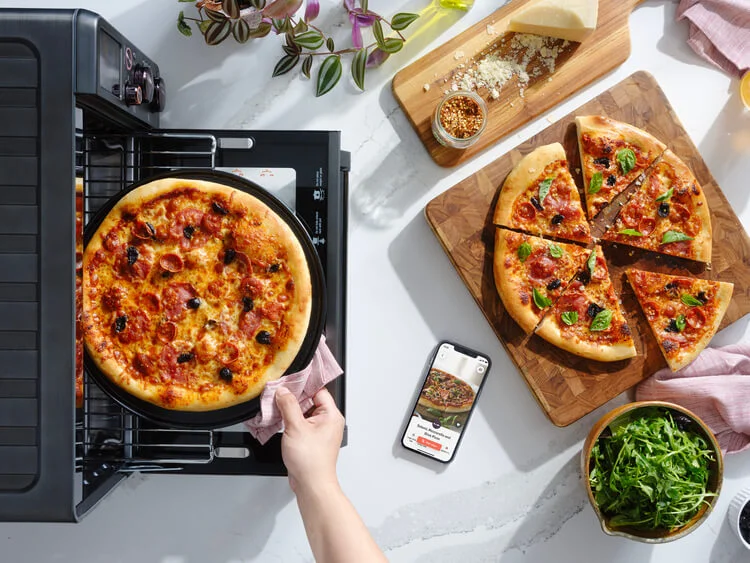
A dedicated pizza oven is ideal if you’re serious about achieving the perfect crust. It reaches higher temperatures (often above 700°F), which quickly crisps the outside while keeping the interior moist.4 Compared to a regular oven, a pizza oven delivers faster and more consistent results. This is why it i important to know how a pizza oven vs. regular oven differs.
Baking temperature: how hot should your oven be?
You might be asking, “How do I make my pizza crust crispy?” If you're using a conventional oven, preheat it to the highest temperature available—usually between 475°F and 500°F. A hot oven helps the crust crisp up quickly, reducing the chance of a soggy middle.
Preheating for maximum heat retention
Always preheat your oven for at least 30 minutes before baking, especially if using a pizza stone or steel. These tools retain heat, helping to replicate the high-heat environment of professional pizza ovens. A fully preheated surface is essential for that golden, crisp finish.
Pro tips to make your pizza crust extra crispy
Sometimes, small adjustments make all the difference. Try these techniques for even better results.
1. Precooking the dough before adding toppings
Parbaking your dough for 3–5 minutes before adding sauce and toppings gives the crust a head start. This is especially helpful for avoiding soggy centers when using a heavier sauce or moist toppings like fresh mozzarella.
2. Using a thin layer of sauce
Too much sauce can weigh down the crust and make it soggy. Stick to a thin, even layer to ensure your crust bakes evenly and maintains its crispness.
3. Choosing the right cheese and toppings
Low-moisture mozzarella helps prevent sogginess while still delivering that classic melted texture. If you’re adding vegetables, consider pre-roasting or lightly drying them to reduce water content.
4. Finishing with a post-bake crisping trick
For an extra crisp edge, place the baked pizza back in the oven on the rack (without the pan or stone) for 1–2 minutes. This allows heat to circulate fully around the crust, adding crunch without overcooking the toppings.
5. Use a perforated pizza pan or baking steel
A perforated pizza pan allows moisture to escape during baking, promoting a crispier bottom crust. Alternatively, baking steel retains high heat and evenly distributes it across the dough, helping create that signature crunch found in thin-crust pizza styles.
Creating the perfect pizza pie at home
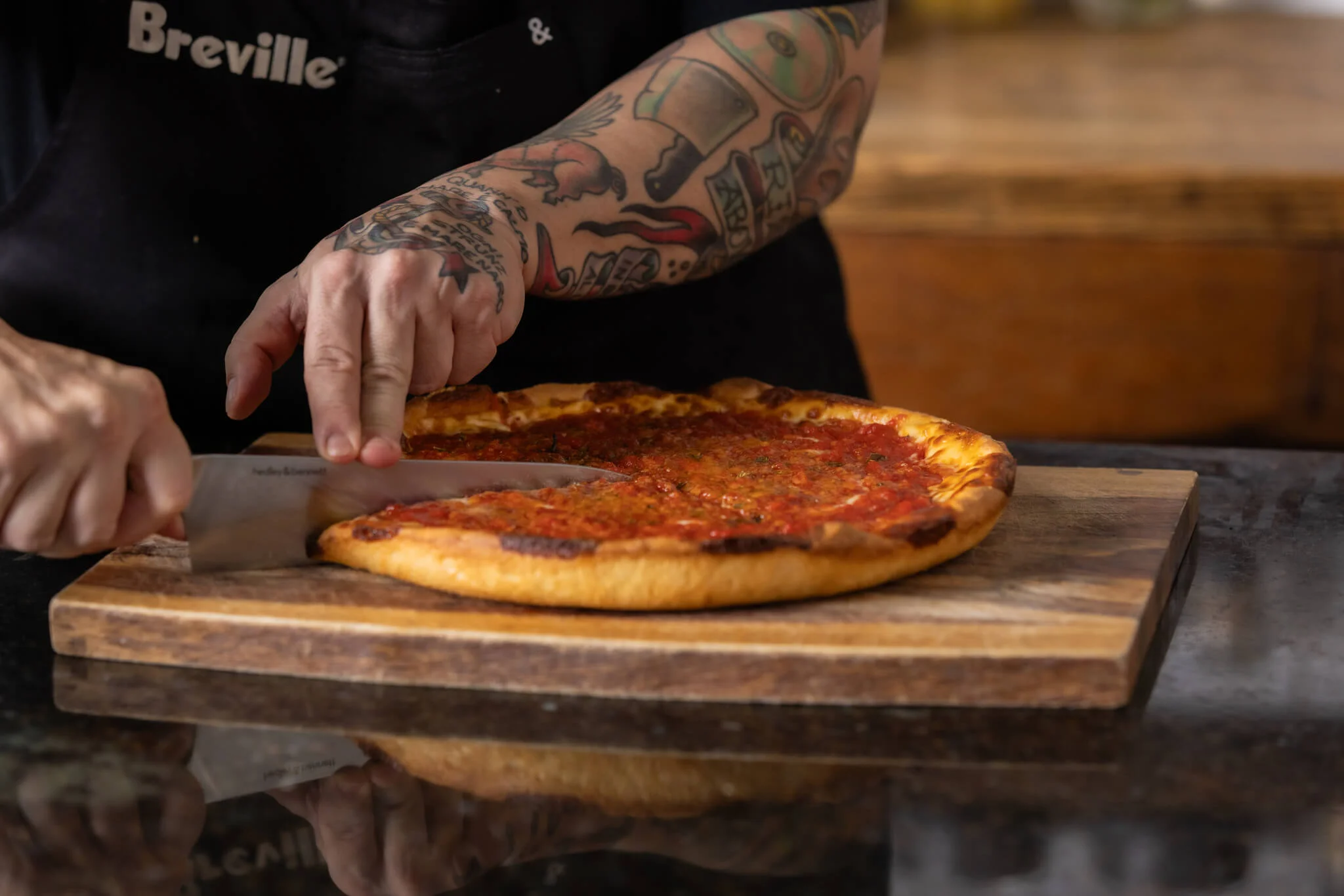
Learning how to make a crispy pizza crust at home is all about balance—between ingredients, dough handling, and heat. From choosing bread flour to using high-heat pizza ovens, each step brings you closer to that satisfying bite. Whether you're making thin crust or classic pepperoni, these tips can help elevate every slice.
Breville’s collection ofpizza ovens is designed to help you bake at higher temperatures with precision control. These ovens provide the intense heat and even distribution needed to produce thin, crispy crusts and golden, bubbly toppings.
Ready to try it yourself? Explore Breville pizza ovens to bring pizzeria-style baking to your home kitchen.
Sources:
1. Food To Live. Why 00 Flour Is the Key to Perfect Dough. https://foodtolive.com/healthy-blog/why-00-flour-is-the-key-to-perfect-dough/?srsltid=AfmBOoo7y8YbQ2-SNxs3aB_2ZKsK8GJ6kGYf4b09B0JvIWbeUMdnLfAe
2. PizzaBlab. The Ultimate Guide to Pizza Dough Hydration: What Every Baker Should Know [Impact on the Dough, Baking Process, Final Product & More]. https://www.pizzablab.com/learning-and-resources/baking/the-ultimate-guide-to-dough-hydration/
3. Chain Baker. Cold Bulk Fermentation, How to Ferment Bread Dough in the Fridge. https://www.chainbaker.com/cold-fermentation/
4. Forno A Legno. Outdoor Pizza Ovens: Everything You Need To Know. https://fornopizzaovens.co.za/outdoor-pizza-ovens-everything-you-need-to-know/