Tip #1: Start by assessing your mess
What you spill and splatter will dictate the best way to clean your microwave oven. From the stubborn stains of sugary sweets to greasy marks of gelatinous goo, there are as many kinds of grime as there are foods to microwave.
For cleaning purposes, however, these can be categorized into one of six possible classifications:
● Fat-based, such as grease splatter
● Protein-based, like caked-on casein (a protein prevalent in dairy)
● Mineral salt-based, such as calcium from milky overflows
● Carbohydrate-based, such as sugar stains from reheating sweets
● Microbiological films, which are residues from yeasts and mold
● Other insoluble solids, such as charred bits of food
There are different solvents and solutions for removing each of these types of residue. Fats, for instance, can be wiped away with hot water or scrubbed off with an alkaline cleaner if they’re particularly stubborn. Mineral salt-based tough stains, on the other hand, are usually better removed with acidic solutions.
Does this mean you need to stock up on six different kinds of cleaners to tackle your messy microwave oven? Thankfully not.
First, try exhausting this set of solutions.
Tip #2: Wipe with water
Many messes from your weekly microwave recipes remove quite easily with a little bit of hot water and some elbow grease. Before breaking out the soaps and sprays, wipe everything down with a wet, warm sponge to see what comes off.
If you’re hopelessly smearing or barely scratching the surface of the tough stains, however, perhaps your microwaveis covered in water-resistant grime. In such cases, it’s likely time to reach for a stronger house cleaning solution.
Tip #3: Purchase premade products
There are many commercial products on the market available for cleaning microwaves. They all say they remove dirt and restore shine so your appliance sparkles like the day it left the box, but not all of them can back up their claims.
Some products, however, truthfully do live up to the hype and get the grungiest of grime out of all types of microwaves, such as:
● Sponge – Many sponges are double-sided, with one side that contains minuscule, gritty bumps that give them the ability to scrape off stubborn goo. Simply wet one down, squeeze out excess suds, and wipe your microwave’s interior until it’s spotless.
● Dish Soap – Dish soap isn’t just for dishes. This powerful mixture works wonders on several surfaces using the same principles as other dish detergents. Soap essentially bonds fats and water on a molecular level, allowing dirt to detach from surfaces and rinse off easily. Simply place some in your microwave and wipe it with a wet soft cloth or damp rag to eliminate grease and gunk.
Either of these powerful products will do a wonderful job of bringing your microwave’s walls back to their former brilliance.
Tip #4: Try some home remedies
While commercial products work, some microwave users may prefer more natural approaches to cleaning their machines—or want to try solutions they already have at home. If this sounds like you, consider these popular DIY solutions for cleaning your microwave:
● Vinegar, lime juice, and other acidic liquids – Mineral buildup, which can be caused by washing your microwave’s components with hard water, appears as a difficult-to-remove haze on metal surfaces. Luckily, common acidic foods, such as white vinegar and limes, can cut right through built-up minerals and help them come right off.
● Baking soda – On the opposite end of the pH scale from acidic things are basic (or alkaline) items. One everyday alkali most people have laying around is baking soda, which works wonders for cleaning microwaves as it cuts through grease, is safe for use with glass and metal, and is still abrasive enough to help lift stuck-on tough stains. Simply make a quick paste with some warm water, apply to your microwave’s interior, and put a little elbow grease into scrubbing it clean.
Keep your microwave spotless with Breville
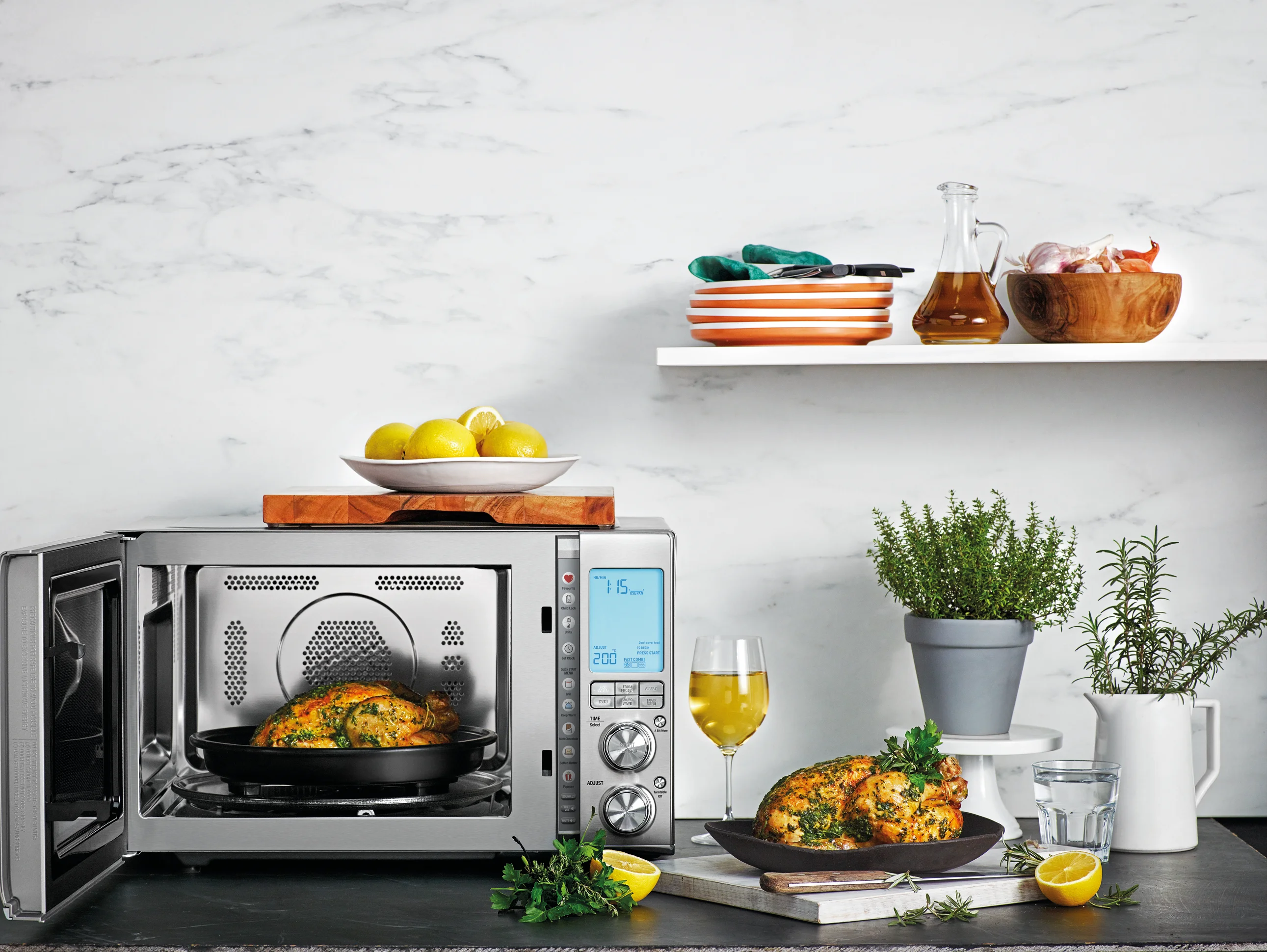
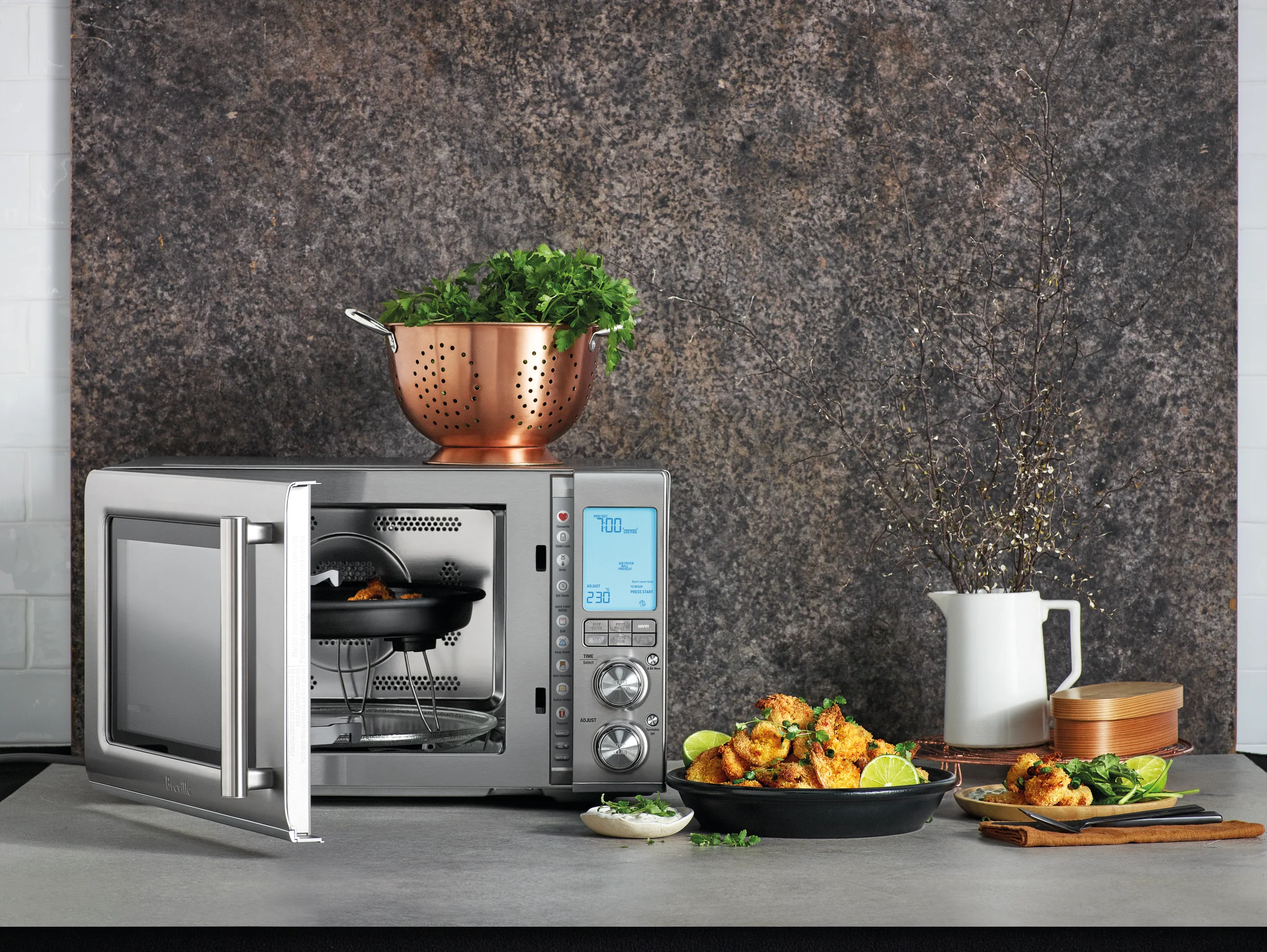
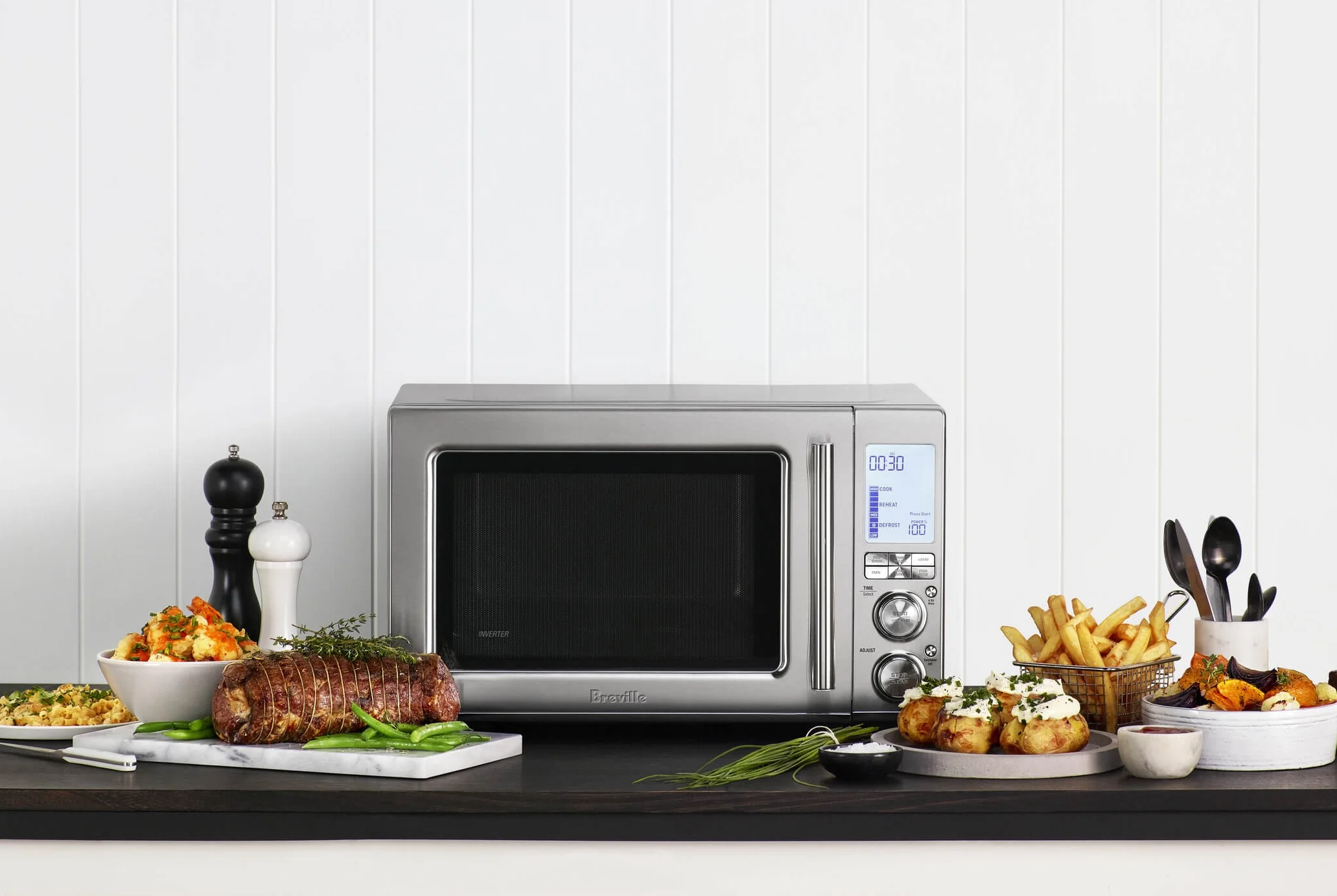
Each and every microwave Breville makes features detachable turntables, removable assembly rings, and a metal interior to make cleaning any accidental spills an absolute breeze.
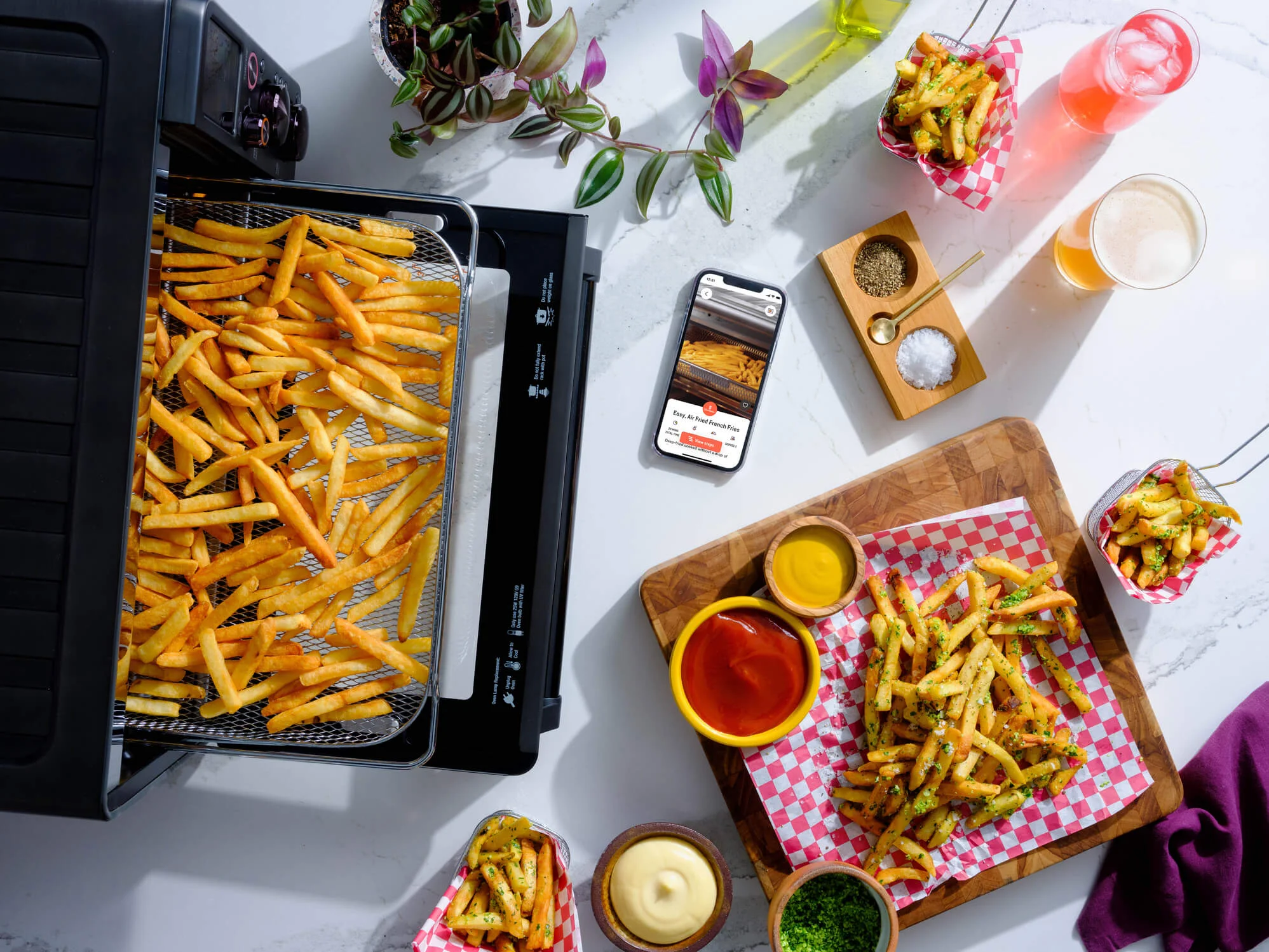
With a diverse variety of cooking functions, including multipurpose units that can bake and air fry, Breville microwaves revolutionize the very idea of countertop appliances and will have you rethinking what's possible in your kitchen.
With Breville, even something as basic as microwaving is an opportunity to do something brilliant.
Sources:
University of Florida. BASIC ELEMENTS OF EQUIPMENT CLEANING AND SANITIZING IN FOOD PROCESSING AND HANDLING OPERATIONS. https://edis.ifas.ufl.edu/
Yale University School of Medicine. Why soap works. https://medicine.yale.edu/
United States Geological Survey. Hardness of Water. https://www.usgs.gov/
New Mexico State University. Selection and Use of Home Cleaning Products. https://pubs.nmsu.edu/