Before investing in this all-in-one food-prepping solution, you must first select a size. Choosing the right size will help you prep food more efficiently and optimize the amount of cleanup that is needed.
When learning how to interpret food processor sizes and choose one that meets your kitchen’s needs, consider your cooking habits, storage options, and other important factors to invest in a food processor that fits your space and your lifestyle.
Understanding food processor sizes
Food processor sizes relate to the amount of food the bowl can hold. Small, medium, and large can mean different things depending on the kitchen appliance, but here are the general measurements:
● Small: 1–4 cups
● Medium: 5–9 cups
● Large: 10+ cups
Now, let’s consider the advantages and potential hurdles of each size according to your slicing and dicing needs.
Small food processors (1-4 cups)
A small food processor, also known as a food chopper, serves as a mini sous chef that fits easily on even the tightest counter space. While it can only process a few handfuls of ingredients, a high-quality mini food processor will make quick work of any food you toss in.
Ideal uses for small food processors
Small food processors accomplish many nitty-gritty cooking tasks such as:
● Mincing garlic
● Grating cheese
● Blending sauces, salsas, and salad dressings
● Chopping single fruits and veggies for snacks
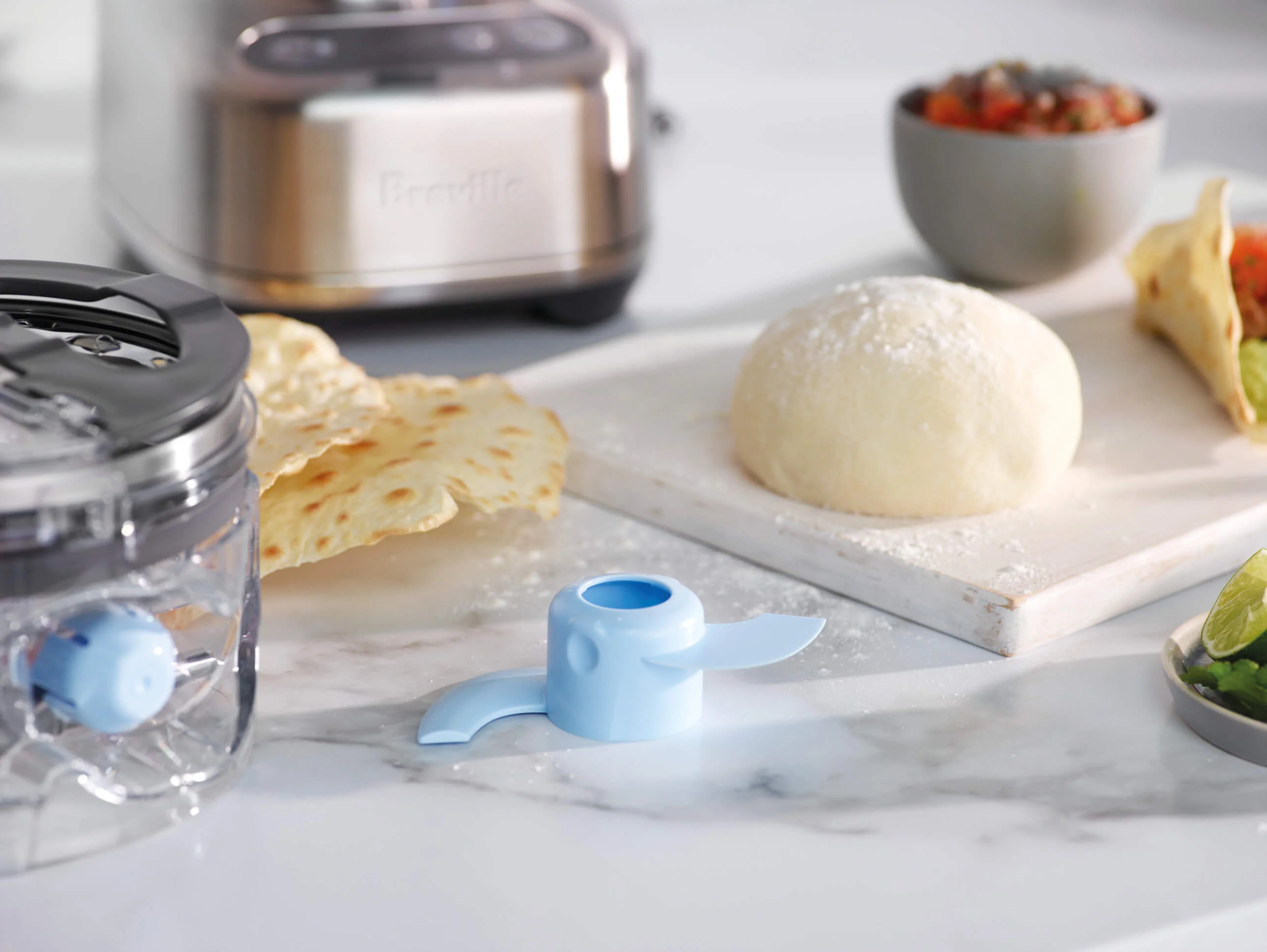
Its work bowl capacity may be small, but with several unique food processor blades, you can achieve mighty kitchen feats and handle many food preparation tasks.
Pros and cons of small food processors
With a small food processor, you can:
● Save on sparse kitchen space – Your cluttered counters and storage cabinets won’t bat an eye at a mini food processor.
● Replace small kitchen tools – Say goodbye to your cumbersome cheese graters and garlic presses. Small food processors can do the jobs of several miscellaneous kitchen tools without all the tough-to-clean bells and whistles.
Understandably, small food processors have one major downside: They can only handle so much. If you want to prepare larger foods or chop ingredients for a big family dinner, you’ll need to upgrade to a bigger size.
Medium food processors (5-9 cups)
Most standard at-home food processors fall into this middle category, and for good reason. Compared to smaller models, they boast enhanced capabilities for food prep while still occupying a modest corner of your kitchen.
Best applications for medium food processors
Medium food processors can complete most at-home food-prepping needs, including:
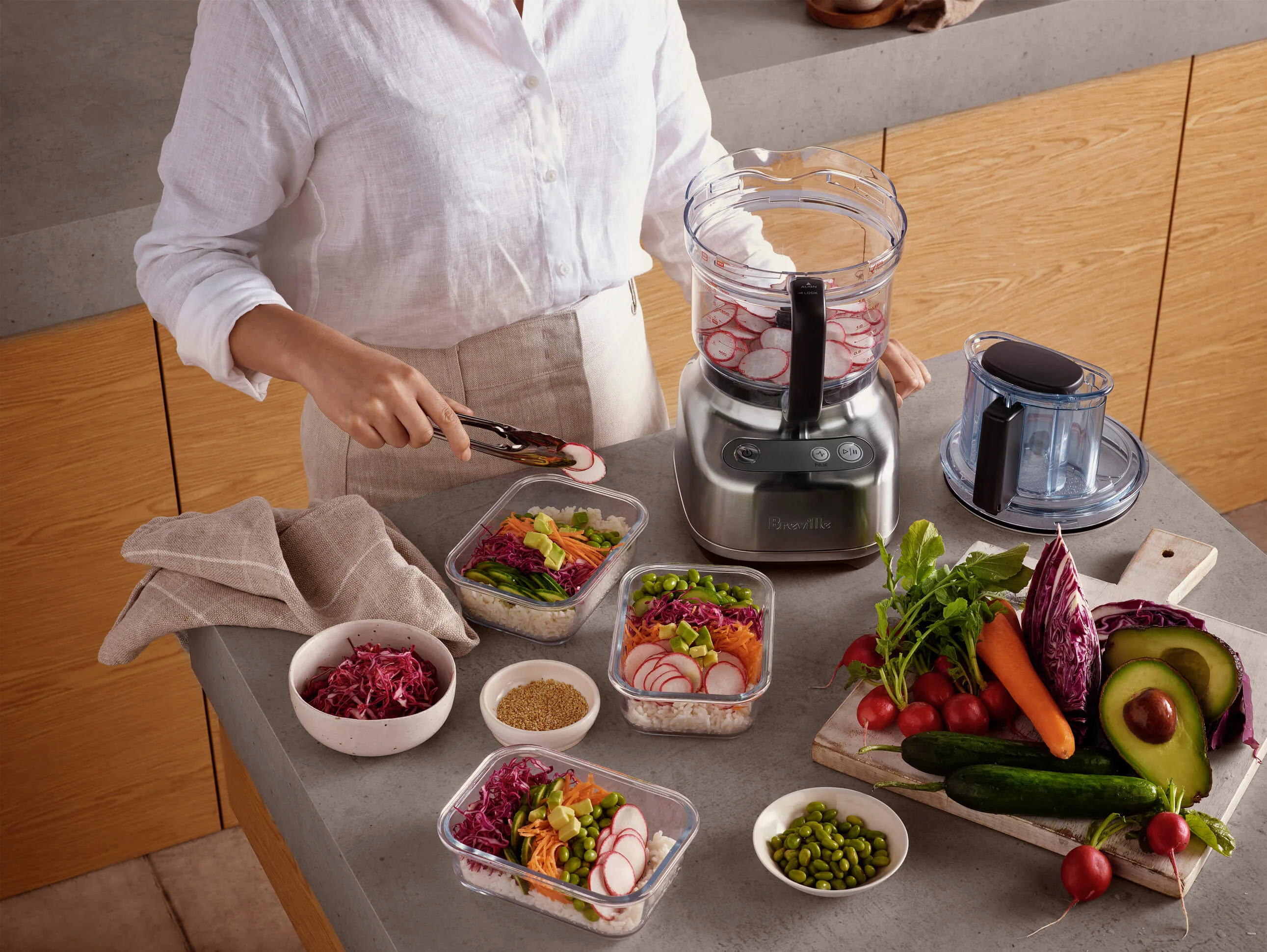
● Simultaneously chopping and mixing salad ingredients
● Cutting butter into flour for pastry dough
● Blending larger batches of sauces and dressings
● Slicing and dicing larger foods like potatoes, cucumbers, and carrots
Advantages and disadvantages of medium food processors
Medium food processors can tackle bigger, more tedious kitchen tasks, making them suitable for:
● Busy at-home chefs
● Weekly meal preppers
● Multiple-person households who want quick food preparation
While medium food processors can handle steeper slicing jobs, they can’t do it all. They also take up more space on your counter.
Large food processors (10+ cups)
You can typically find 12, 16, and even 20-cup food processor options in this top-most food processor tier. Most commercial kitchens opt for large food processors for their food prep, but they can aid any at-home kitchen (with adequate space).
Common uses for large food processors
You can use a large food processor to:
● Chop ingredients for entire meals, such as large casseroles and stews
● Knead big batches of dough for breads and cookies
● Blend sauces, with plenty left to pop in the freezer for another day
Thanks to this grand size, you can process practically any ingredient, any way you want it.
Benefits and drawbacks of large food processors
Large food processors can complete your most time-consuming kitchen duties in a matter of seconds, rendering most other food-prepping tools and appliances obsolete. They offer the greatest benefits to:
● Commercial kitchens
● Large families
● At-home food-prepping fanatics
However, to claim the rewards of a large food processor, you need adequate kitchen storage and counter space.
Choosing the right size for your needs
The positives and negatives of food processor sizes largely depend on your individual needs and preferences.
Before selecting a size, consider:
● How much you cook (both amounts and frequency)
● Which tools and kitchen appliances you can now replace
● Your available counter and kitchen storage space
Assessing your cooking habits
Answer the following questions to better understand your food processing needs:
● Cooking frequency – Do you prepare a complex, home-cooked meal every night, or do you leave the cooking for weekends and holidays?
● Food prepping tendencies – Do you like to meal prep in large batches, or do you prefer to play each dish by ear?
● Cooking quantities – Do you need to feed a large family, or are you usually a party of one?
Space and storage considerations
Small food processors can normally live permanently on your counter, while larger models require a coveted spot in a storage cabinet. Consider how much space you can spare for your food processor before choosing a size.
Save additional kitchen space by removing the tools and appliances your food processor now replaces.
Breville: Your expert set of hands in the kitchen
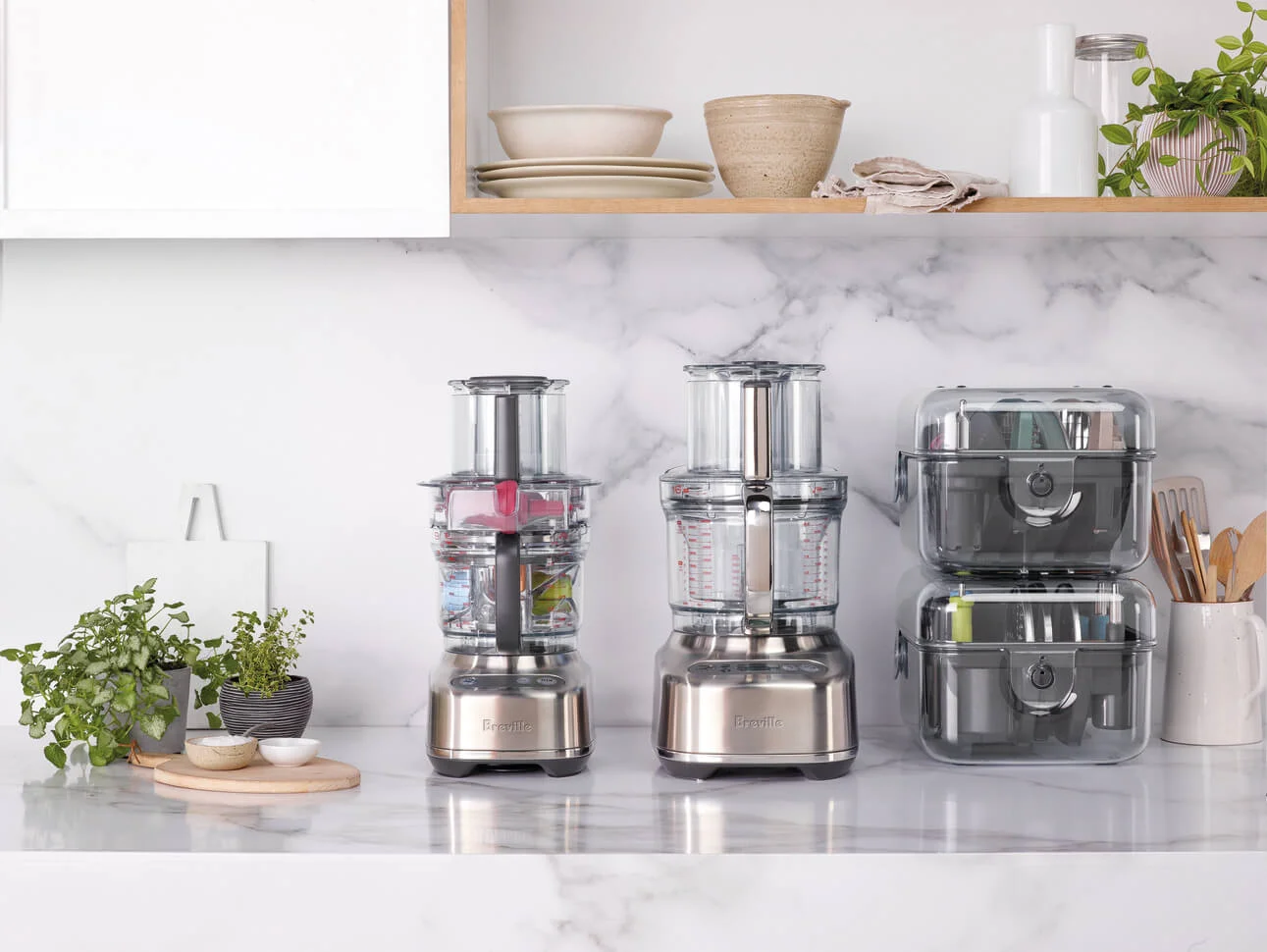
Ready to slice, dice, chop, and whip with the power and ease of a single kitchen appliance? The the Paradice™ 9 and the Paradice™16 from Breville contain 9 or 6 cup options to support every food prepper’s needs. Choose from various precision blades in different sizes, as well as dicing attachments to make food prep a breeze.
Explore the complete Breville food processor collection today.
Sources:
1. Consumer Reports. Food processors & choppers. https://www.consumerreports.org/appliances/food-processors-choppers/buying-guide/?srsltid=AfmBOorc7vlrJqddVXIfFnkfQJ8ddvOYHuDZGHf9LJ7lDLDpVC-vCFAi