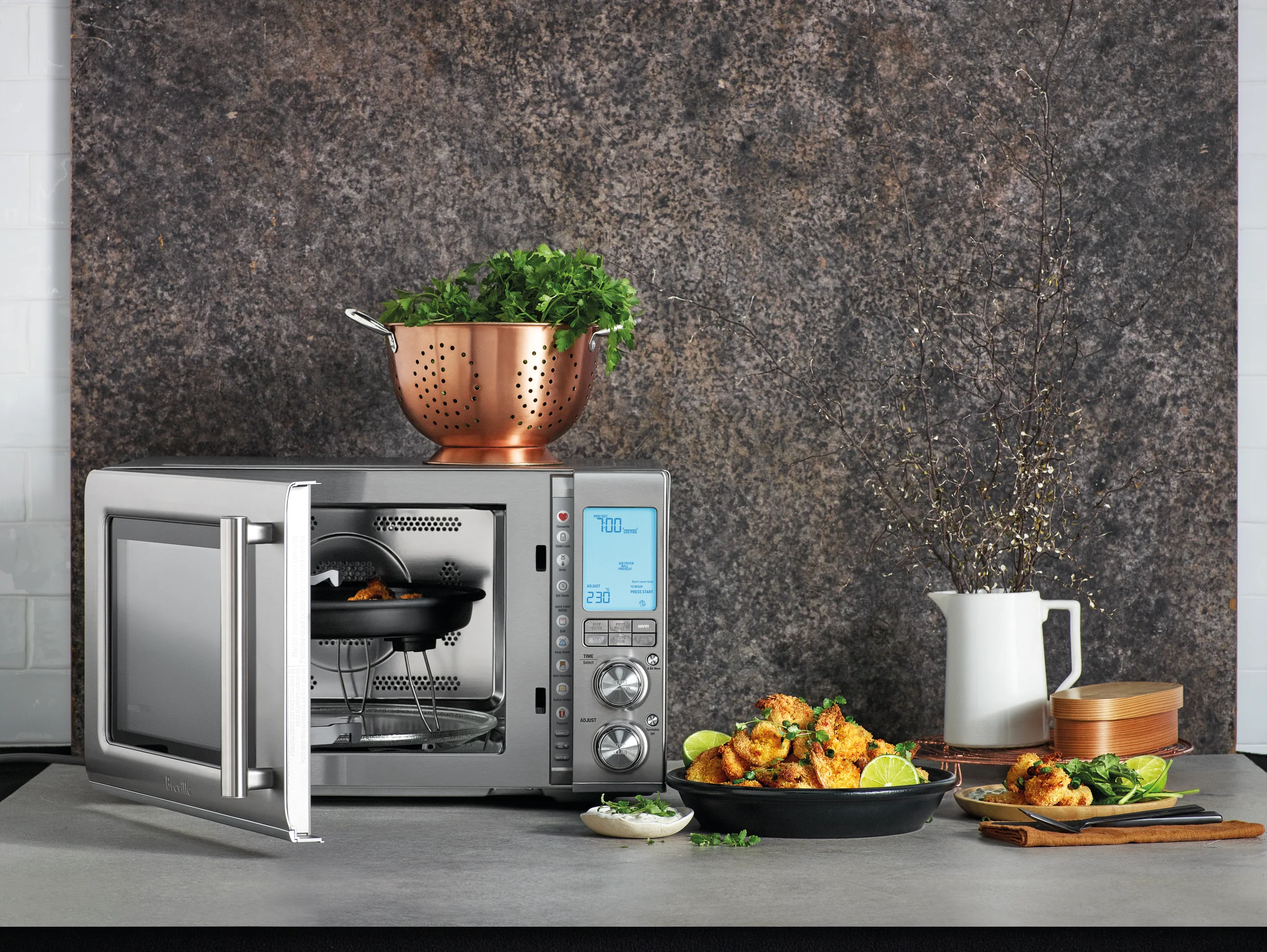
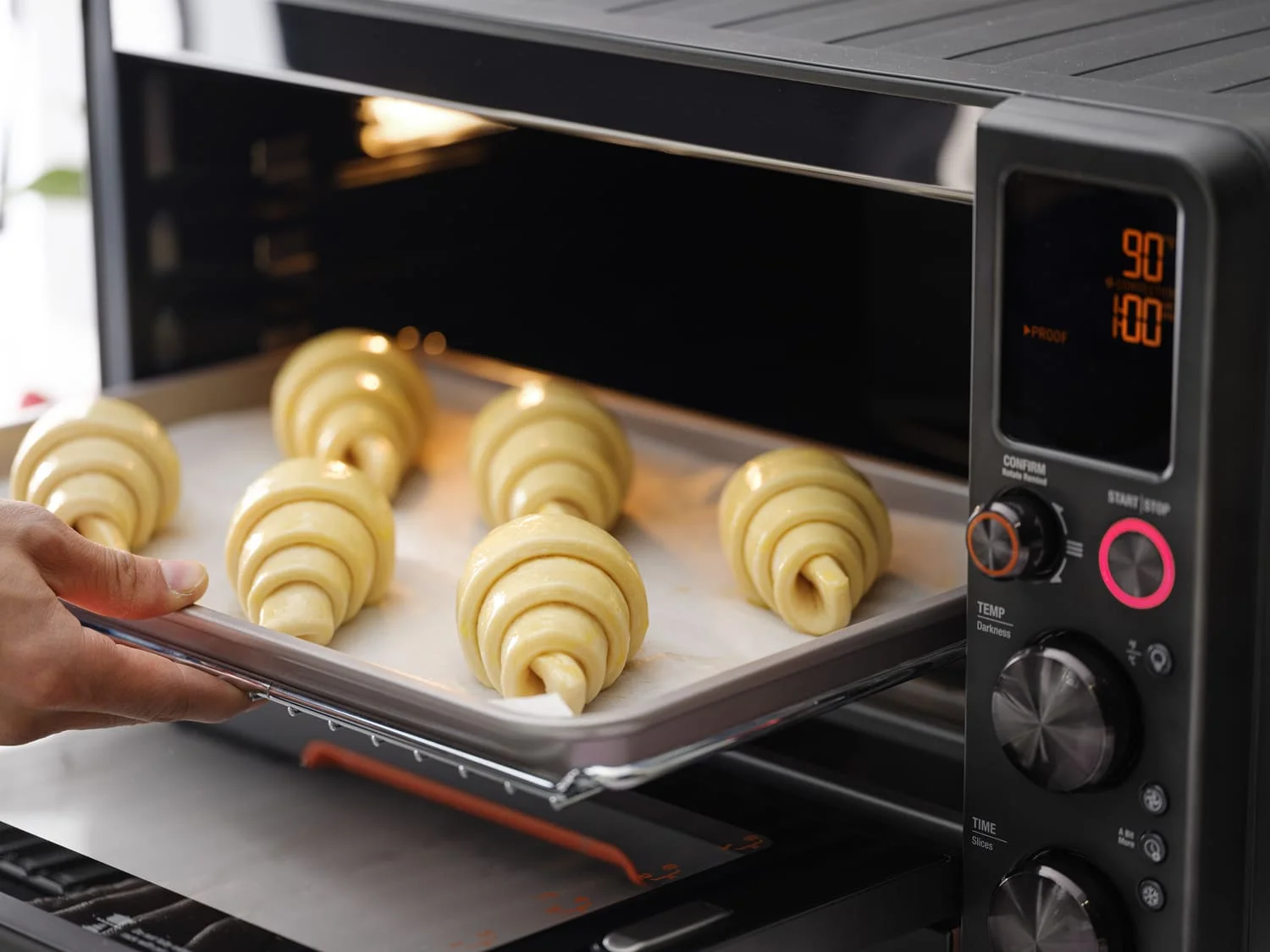
This is where air fryers and convection ovens can come in handy—these two kitchen appliances can produce delectably crispy dishes without excessive oil. In turn, they’re ideal for health-conscious home cooks who want to be mindful of their calorie intake.
While air fryers and convection ovens share similar selling points, they also have some important distinctions. So, what’s the difference between an air fryer vs. convection oven? Read on to find out which appliance may be the best choice for your kitchen.
What is convection cooking?
To start, it’s important to define convection cooking. Despite what their names may suggest, air fryers and convection ovens both use convection cooking—not deep frying.
● Convection cooking creates crispiness by circulating hot air around your food as it is baked using a fan. Convection fans don’t require as much oil as a regular oven.
● Deep frying takes place when you submerge food in hot oil. While deep-fried food can be delicious and extra-crispy, it’s not the healthiest. Fried foods are known for their saturated fat, trans fat, and high calorie content.
Convection cooking may not crisp food quite as much as deep frying, but it wins out in terms of convenience, cost-effectiveness, and healthiness. This is why air fryers and convection ovens have become so popular in recent years.
See related: Air Fryer vs. Deep Fryer
How does a convection oven work?
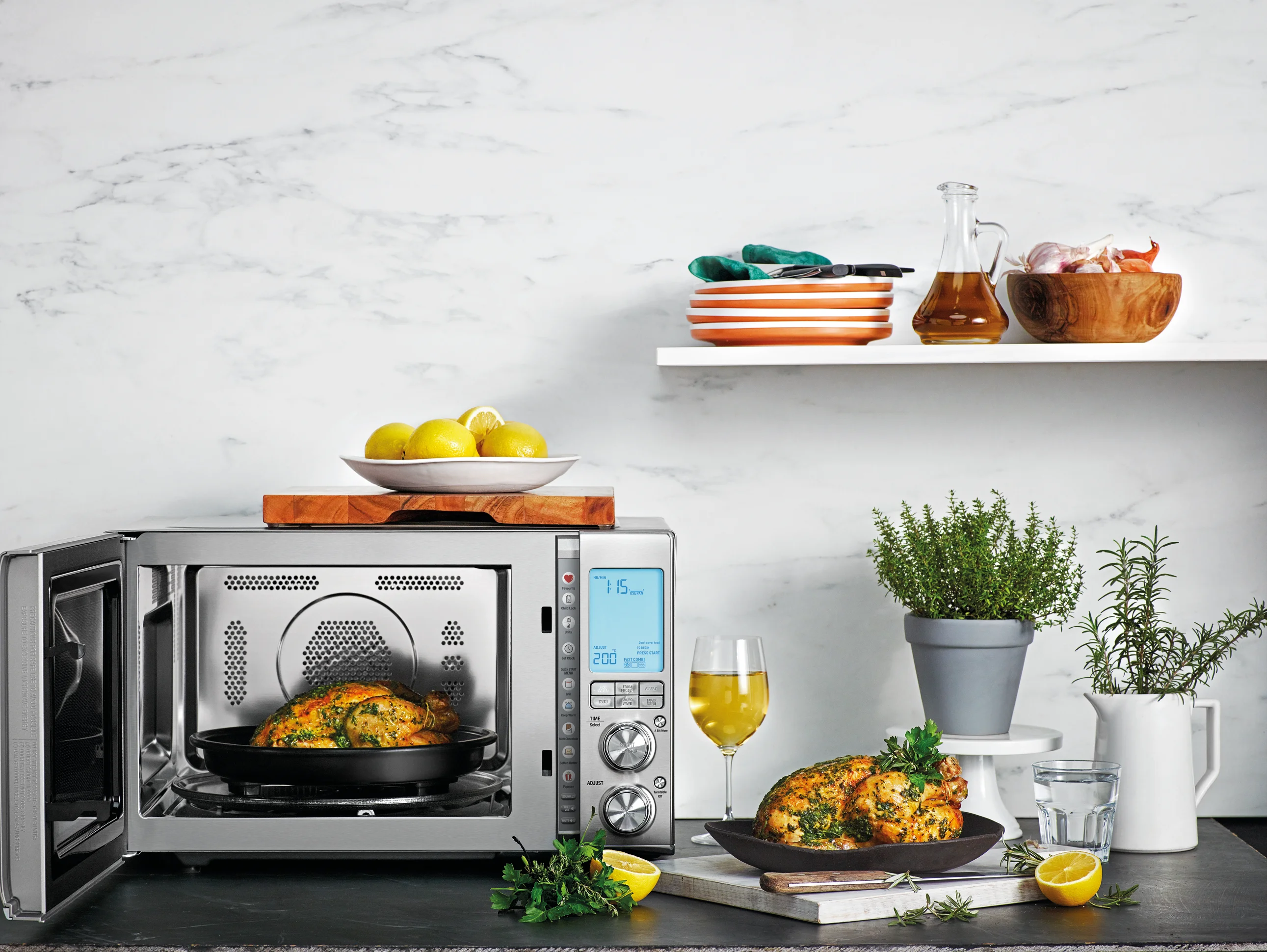
Unlike a traditional oven, convection ovens are countertop ovens with fans inside. These fans circulate hot air evenly to produce crispy side dishes and snacks.
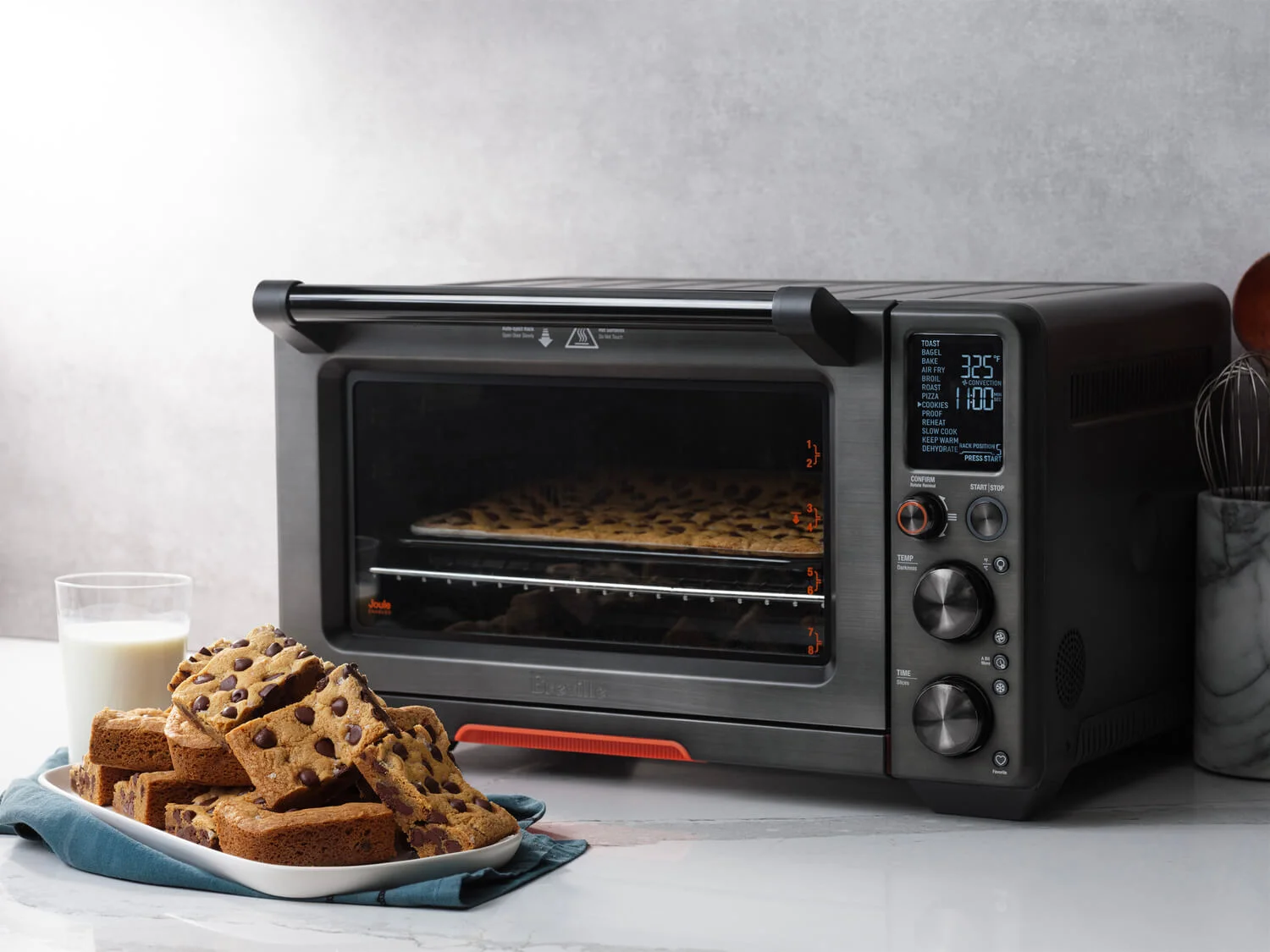
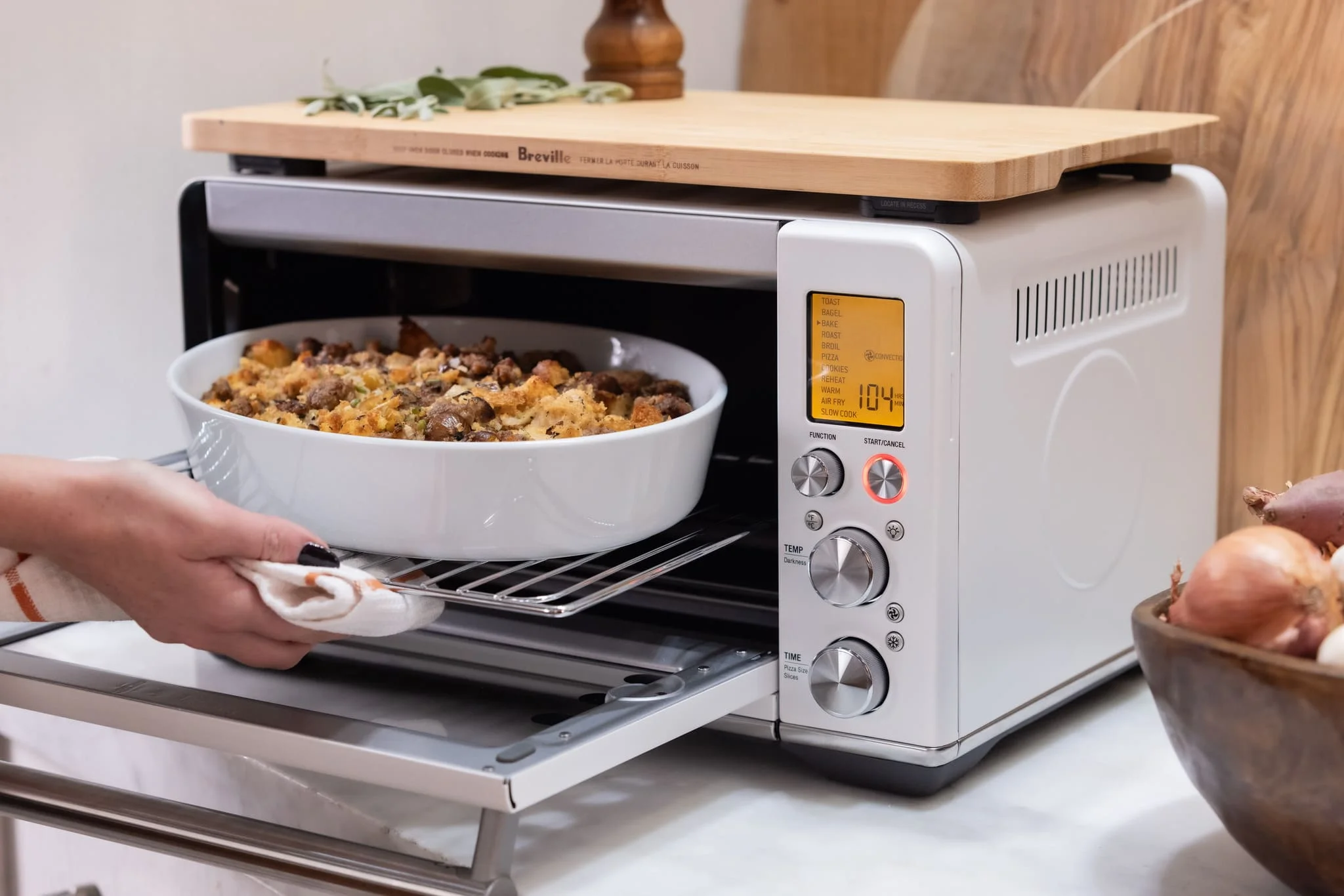
Convection ovens look similar to standard toaster ovens. Most are rectangular, have a front-opening glass door, and contain racks or trays inside.
Convection ovens have been staples in commercial kitchens for decades, and they’ve since become popular amongst home chefs. This is because they enable you to cook food faster than you could with a conventional oven.
How does an air fryer work?
Air fryers are small, tabletop appliances that use fans to circulate hot air. In this sense, air fryers are essentially a form of a convection oven—just smaller in size. These machines entered the culinary scene back in 2005, but they experienced a stark rise in popularity in 2018 after being named one of Amazon’s hottest gifts.
Most air fryers have cylindrical bodies, opaque exteriors, and removable baskets. By fanning hot air evenly throughout their baskets, air fryers produce even crispiness on the outer part of your culinary creations. And, due to their small size, they can heat up quickly and crisp up food better than a convection oven or conventional oven.
While the compactness of air fryers means you can easily stash one away in your cabinets, it also means their cooking capacity is quite limited—most air fryers can only cook one to two servings at a time. If you try to overload your air fryer, it can cause your food to come out uneven or less crispy.
Convection oven vs air fryer: The pros and cons
So, let’s review: Air fryers and convection ovens both cook food by circulating hot air around the food. They also allow excess oil to drip off your food while it cooks, minimizing calories. In turn, these appliances share more similarities than differences.
Even so, they have some distinct pros and cons:
Air fryer pros
Air fryers stand out for their:
● Compact size – As we mentioned earlier, air fryers are smaller than most convection ovens. In fact, this is the most notable difference between these two appliances. Air fryers’ compact size is an upside for cooking enthusiasts with limited kitchen storage space. You can tuck your air fryer away in your cabinet or pantry with ease.
● Portability – Air fryers’ compact size makes them easy to transport. If you want to bring your air fryer to a family cookout, camping trip, or road trip vacation rental, you can easily do so.
● Fast cooking times – The small but mighty air fryer can heat up quickly and circulate hot air with greater intensity than most convection ovens. In turn, air fryers boast impressive cooking times, making them the perfect appliance for hangry home chefs.
● Crispier results – With air fryers’ super-fast fans and high temperature, these robust appliances can produce crispy food that comes as close to deep frying as you can get without ample oil.
Air fryer cons
While air fryers boast a lot of advantages, they fall behind convection ovens on these fronts:
● Limited capacity – Air fryers’ small size may be a perk for some home chefs, but it can just as easily count as a con for others. That’s because air fryers can only produce a couple of servings at a time.
If you have a big family, host large groups of people, or enjoy meal prepping multiple servings, an air fryer’s limited capacity may be frustrating and inconvenient. You’ll have to cook several batches back-to-back to produce the same amount as you could with a convection oven.
● Opaque basket – Air fryers typically don’t allow you to see inside while cooking your food. In turn, keeping tabs on your air fryer recipe’s progress can be a challenge. You may be more likely to burn your food if you don’t open up the basket and shake its contents occasionally.
● Noisiness – Some air fryers can be quite noisy—they produce a humming sound of up to 40 to 60 decibels. This is equivalent to the sound of light traffic or an electric fan.
Convection oven pros
Now that we’ve covered air fryers’ pros and cons, let’s turn our attention to their convection oven counterparts.
Some food enthusiasts prefer convection ovens over air fryers for their:
● Roomier capacity – Convection ovens can range from 15 inches by 19 inches to 30 inches by 36 inches, with a standard depth of 16 inches. Due to their spaciousness, you won’t have to restrict yourself to one to two servings of food as you would with an air fryer. Thus, convection ovens are better for foodsmiths who want to cook for more than two people or batch-cook their dishes.
● See-through front door – Since you can watch your food cooking in the convection oven through its glass door, you can keep a close eye on its progress and remove it when it’s just right.
● Simple cleanup – Some convection ovens have a self-cleaning feature, making cleanup a breeze. Others may require a quick wipe-down every so often. Air fryer baskets and trays, in contrast, must be washed after every use.
● Additional settings – These days, some convection ovens can do a lot more than bake food. Those with additional settings may also broil, roast, reheat, slow cook, toast, dehydrate, and even air fry. By purchasing one of these machines, you can get the benefits of both appliances (plus many others). Read up on how to dehydrate fruit to learn more.
Convection oven cons
Along with these advantages, convection ovens also have some downsides when compared to standalone air fryers. These cons include their:
● Required countertop storage – Due to their large size, convection ovens typically need to live on your countertop (unless you have extra spacious cupboards).
● Slightly slower cook times – Since convection ovens are larger than air fryers, convection cooking takes slightly longer to achieve the same results. They also need to be preheated like a regular oven. However, convection ovens are still much smaller than conventional ovens. Thus, they’ll still crisp up your food faster than a regular oven.
When to use an air fryer vs. toaster oven
If you’re still on the fence about which appliance to choose, follow these recommendations:
You should opt for an air fryer if you only cook for 1-2 people, have limited counter space, want to store the appliance away, or only want an appliance with air-frying capabilities.
In all other scenarios, a convection oven with air-frying capabilities wins out. Due to its spacious size and copious settings, this type of convection oven allows you to do everything you can with an air fryer at scale, plus so much more.
Breville: Powerful convection ovens with air-frying capabilities
Interested in convection-style cooking? Breville has the tools you need. Our Ovens + Air Fryers can cook, bake, or reheat any tasty dish you’re craving, from crispy cookies to mouth-watering pizzas.
For instance, our Smart Oven® Air Fryer has 11 smart cooking functions, including toasting, baking, broiling, roasting, warming, reheating, slow cooking, and air frying. And, thanks to its powerful dual-speed convection fans, it can slash your cooking time by up to 30%. If you opt for the Smart Oven® Air Fryer Pro, you can score two additional cooking functions as well.
As with all of our kitchen appliances, Breville ovens are built to last. These premium machines are made of brushed stainless steel and come with all the high-end bells and whistles. Find the ideal convection oven for your kitchen from Breville today.
Sources:
1. Healthline. Why Are Fried Foods Bad for You?https://www.healthline.com/nutrition/why-fried-foods-are-bad
2. The New York Times. The How the Air Fryer Crisped Its Way Into America’s Heart. https://www.nytimes.com/2022/01/25/dining/air-fryer.html
3. The Business of Business. Air fryers were the "it" gift for Christmas 2018 according to Amazon sales-rank data. https://www.businessofbusiness.com/articles/air-fryers/
4. Consumer Reports. Quietest Air Fryers. https://www.consumerreports.org/appliances/air-fryers/quietest-air-fryers-a2474874676/