But when comparing an air fryer vs. microwave, you may wonder, is one of these kitchen appliances better than the other?
Below, we’re breaking down everything you need to know about cooking food with an air fryer vs. a microwave to decide which is best for you.
What’s the main difference between an air fryer and a microwave?
From the outside, all types of microwaves and air fryers look quite different—and as it turns out, the same applies to their insides.
Both microwaves and air fryers are meant to cook and heat food, however, each device does so through unique methods. Put simply, an air fryer heats food from outside-in, while a microwaveheats food from inside-out. Let’s explore more below.
How do air fryers work?
The air fryer is a kitchen appliance that combines the crispiness of conventional oven cooking with the efficiency of microwave cooking. But how exactly does an air fryer work?
Often shaped like domes or cylinders, air fryers use hot air circulation to cook food. Like convection ovens, this technology helps air fryers create a crispy exterior and evenly cooked interior. Most air fryers create hot air circulation with these working parts:
● Cooking basket – This retractable tray holds your food and often contains perforations or a mesh bottom for hot air to flow through.
● Heating element – In order to create heat, an air fryer will feature a heating element that’s capable of raising temperatures up to 400 degrees Fahrenheit.
● Fan – Once the heating element warms the cooking basket to the proper temperature, a fan will circulate the heated air for even cooking.
How do microwaves work?
A staple in home kitchens since 1955, microwave ovens provide a fast and easy way to heat food. Unlike air fryers, these small, box-shaped appliances heat food through the power of electromagnetic waves.
These electromagnetic waves in the microwave oven’s chamber create a vibration that generates heat which, in turn, cooks your food.
Compared to air fryers, microwaves often have more settings and distinctive heating capabilities. Depending on the complexity of your microwave oven, these settings could include:
● Defrost
● Reheat
● Frozen meals
● Popcorn
● Chicken and meat
● Potato
● Low, medium, and high heat
When should you use an air fryer?
Since air fryers cook food by circulating hot air, they can often replace your oven (as both appliances use this cooking technique). To that end, you can consider skipping the preheat session and plugging in your air fryer when you’re looking for:
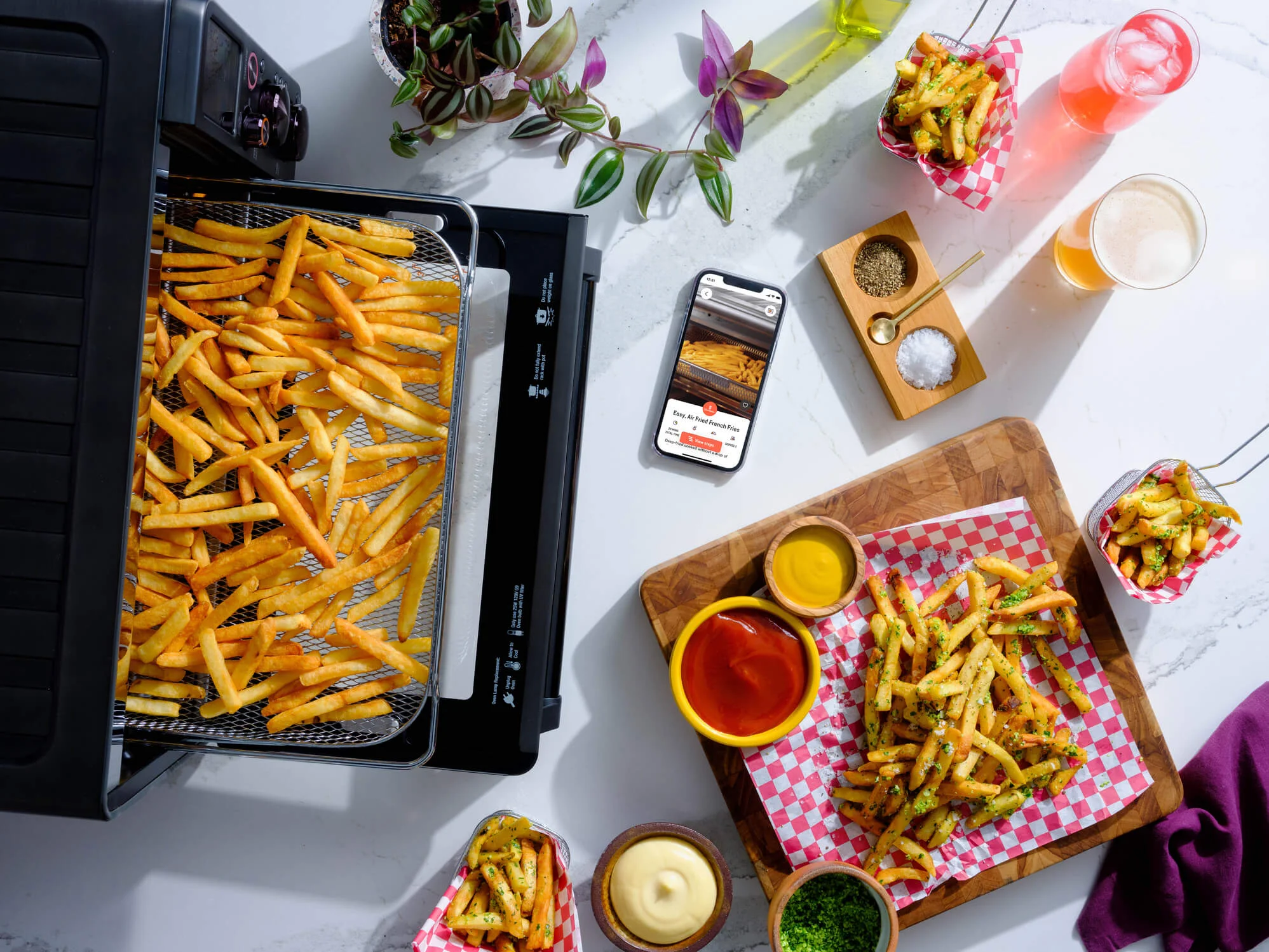
● Crispy delights – The air fryer reigns supreme when it comes to achieving a satisfying crunch. Use it for cooking or reheating foods that benefit from a crispy texture, such as French fries, wings, or breaded items.
● Healthier indulgences – If you crave the flavors of deep-fried goodness without the excessive oil, the air fryer is your culinary savior. Because they require significantly less oil, temperature-adjustable air fryers let you enjoy your favorite fried treats while cutting calories by about 70–80%.
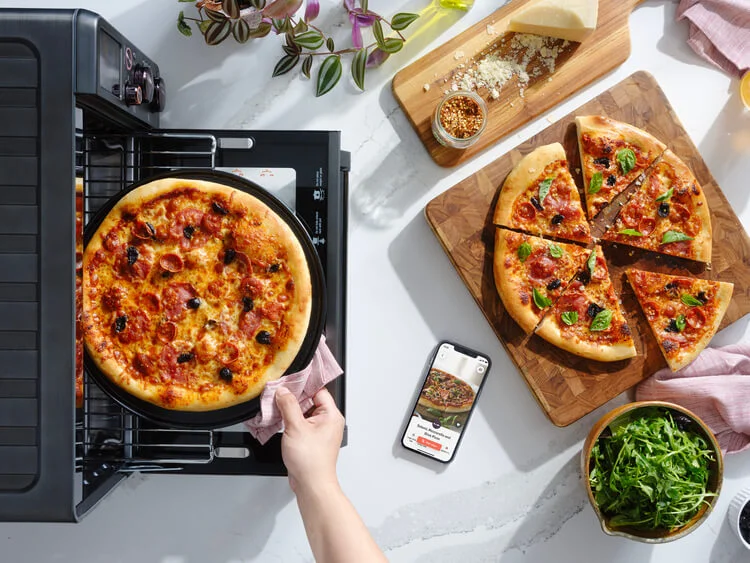
● A versatile cooking option – Most air fryers offer settings that mimic frying, roasting, and grilling. This means you can use it to prepare a diverse range of dishes, from perfectly seared steaks to roasted veggies.
● Time-efficient oven use – Because it’s smaller in size than an oven, an air fryer can rapidly preheat and cook food, making it ideal for individuals who don’t want to wait that extra fifteen minutes.
When should you use a microwave?
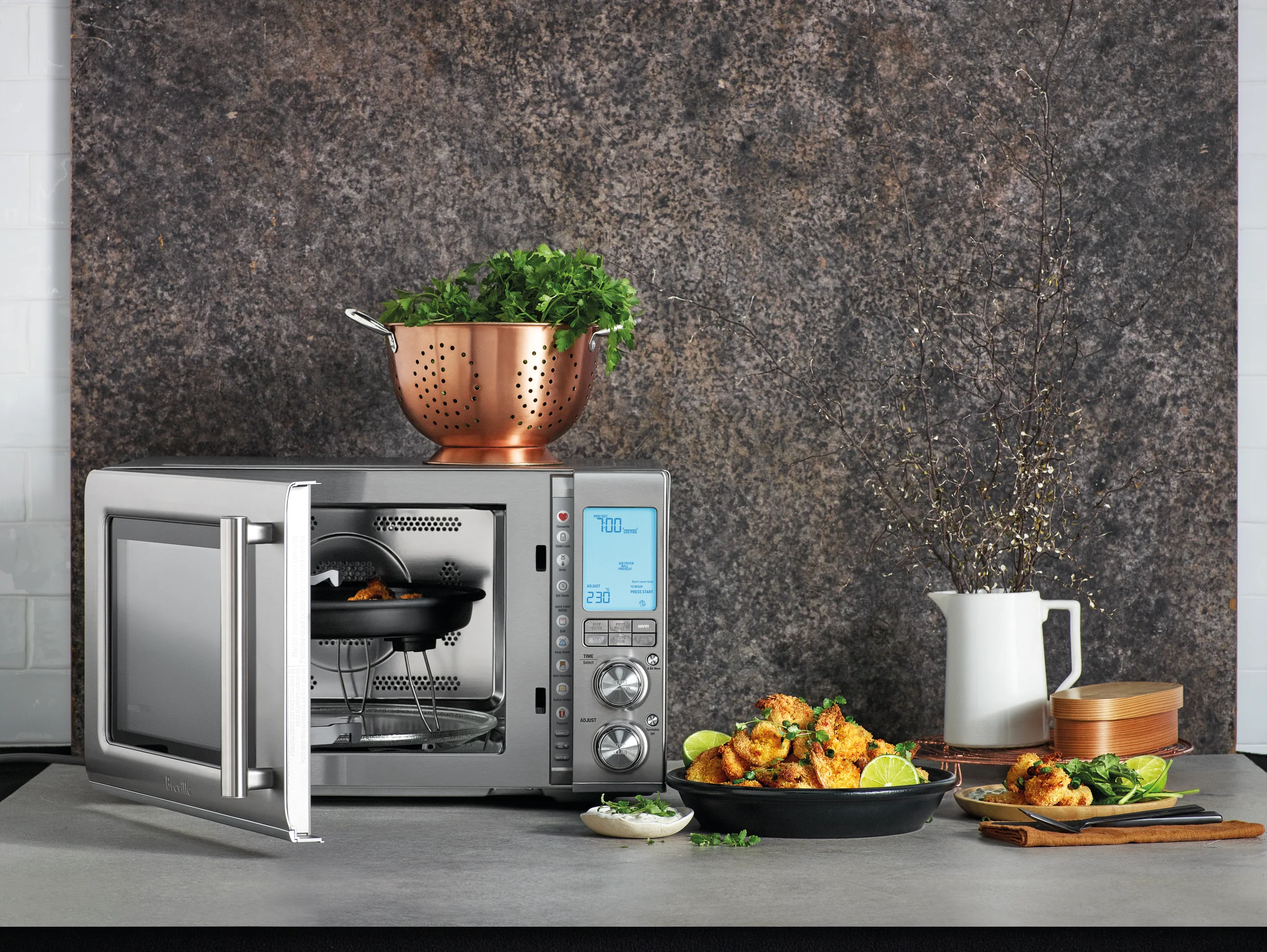
While air fryers are renowned for their cooking abilities, microwave ovens are best used for their heating abilities. Microwave ovens cook from the inside-out, which makes them perfect for infusing food with heat, rather than taking them from a raw to cooked texture. In fact, some microwaves even have an air fryer built in, giving you the best of both worlds.
Consider using your trusty microwave for any of these cooking needs:
● Quick reheating – When time is of the essence, the microwave swoops in as the undisputed champion. It excels at swiftly reheating leftovers, beverages, or even pre-packaged meals, saving you time in your busy schedule.
● Steaming – By heating up water molecules, microwaves can create a steamy environment that cooks vegetables, grains, and other food in a healthy manner.
● Cooking frozen food – Microwaves are best used for frozen food since they heat up the icy water molecules to “cook” the food. There are also several microwave recipes you can try. Consider choosing your microwave if you need to defrost a pre-packaged meal or frozen leftovers.
See related: How to Clean a Microwave
Air fry, microwave, and more with a Breville
Rather than decide between an air fryer vs. microwave, why not empower your culinary creations with one compact kitchen appliance that can do it all?
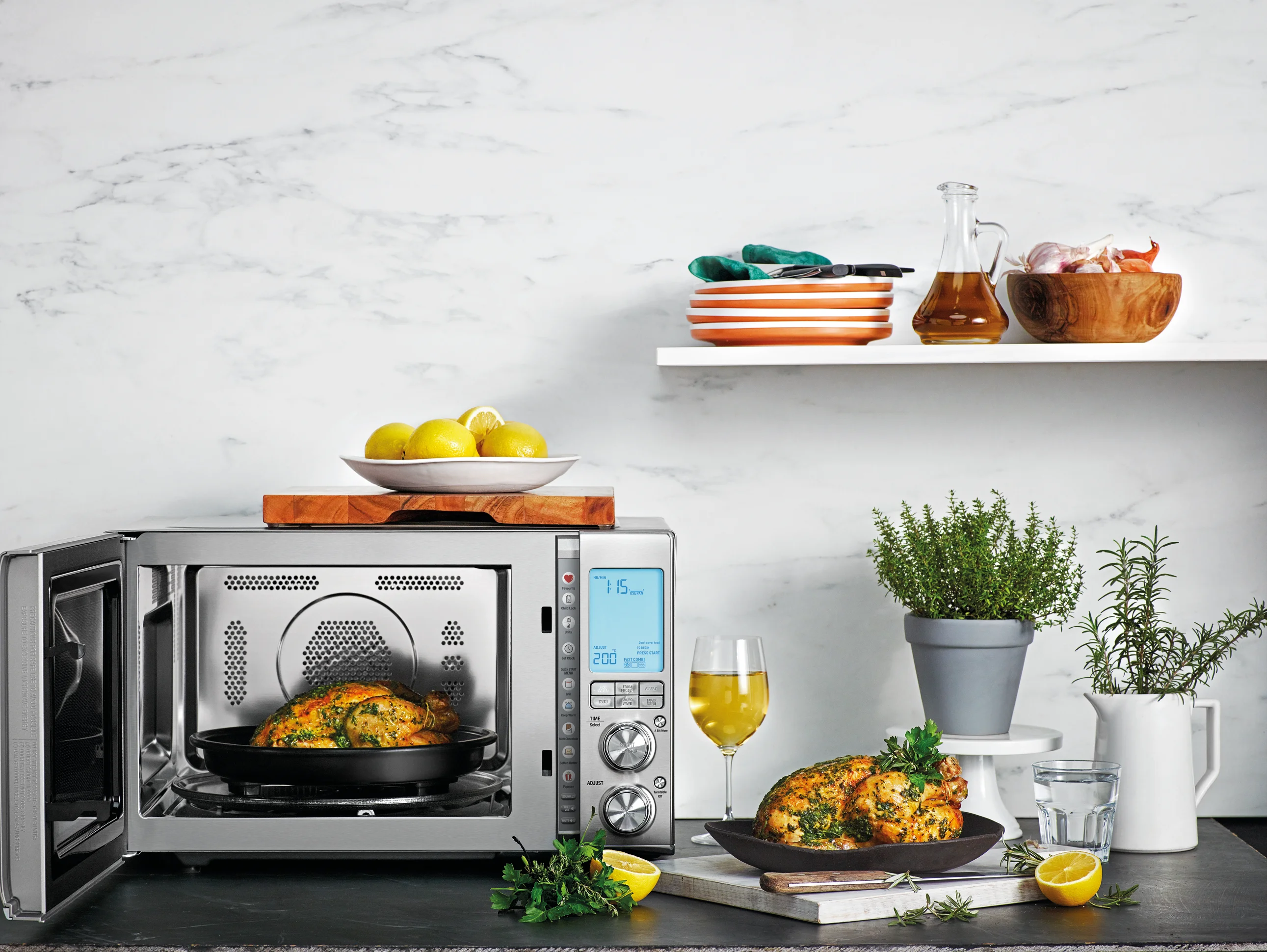
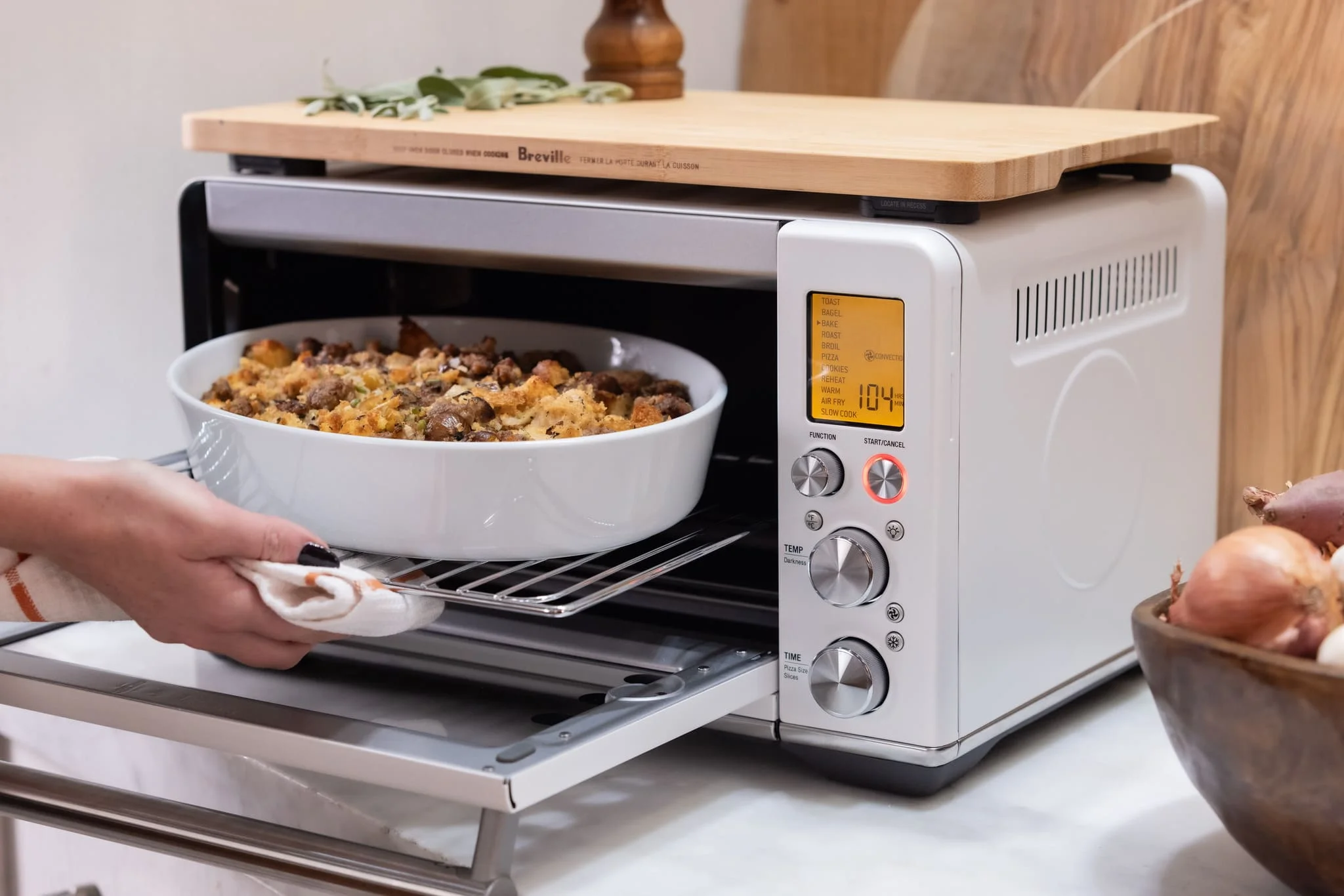
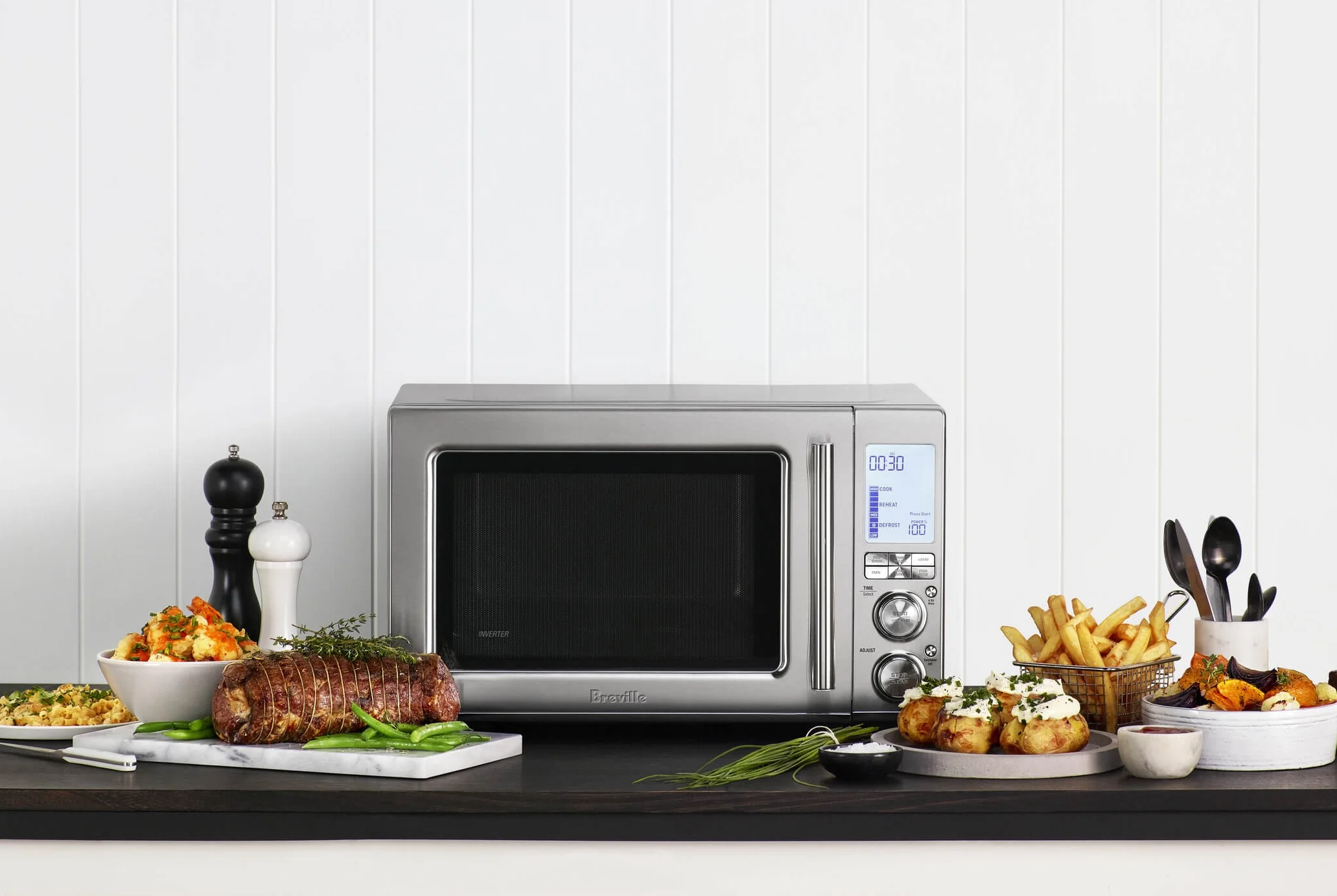
The Breville’s Combi Wave 3 in 1 combines an air fryer, a microwave, and a convection oven so that you can experience the best that each appliance has to offer. The Combi Wave 3 in 1 also features our Element iQ smart cooking system, a variety of functions, one-touch auto settings, and more.
For an easy-to-use appliance that serves up hard-to-forget meals, check out the Combi Wave 3 in 1 today.
Sources:
1. Food & Drug Administration. Microwave Ovens. https://www.fda.gov/radiation-emitting-products/resources-you-radiation-emitting-products/microwave-ovens
2. US News. How Does an Air Fryer Work? https://www.usnews.com/360-reviews/home-goods/air-fryers/how-does-air-fryer-work
3. WIRED. Oct 25, 1955: Time to Nuke Dinner. https://www.wired.com/2010/10/1025home-microwave-ovens/
4. Cleveland Clinic. Air-Frying: Is It As Healthy As You Think?https://health.clevelandclinic.org/air-frying-is-it-as-healthy-as-you-think/