It’s true—going from a conventional gas or electric range to an induction range is no small change. Many models feature a sleek and minimalistic design that can be challenging to decipher. Thankfully, learning how to use induction cooker technology isn’t rocket science—it's just culinary simplicity.
From setup to finding the right heat setting and everything in between, join us as we explore a few simple induction cooker tips that will have you crafting delicious meals in no time.
Setting up your induction cooker
Let’s take it from the top: the induction stove setup stage. This step is crucial, especially if you’re troubleshooting any issues. Ensure that your induction stovetop is:
● Suitably located on a flat, stable surface.
● Properly plugged in and connected to a working electrical outlet that is properly grounded.
● Paired with compatible, magnetic cookware (try using a magnet to test if you’re unsure).
Some induction stovetop ranges have stringent requirements for the cookware, so it may be good to double-check the manufacturer’s instructions. For example, a skillet might be too large or too small, or have a concave or convex base that the sensor cannot detect. Make sure your induction cookware fits within the cooking surface.
Basic steps to use an induction cooker
Although there are various models of induction cooktops, most operate in a relatively similar way. Consider three basic steps to get started:
#1 Turning it on and selecting settings
There are many differences between a gas stove vs. an induction cooktop, including how they are powered on. Where gas ranges have a switch and electric ranges have knobs, induction cooktops usually start with a power button.
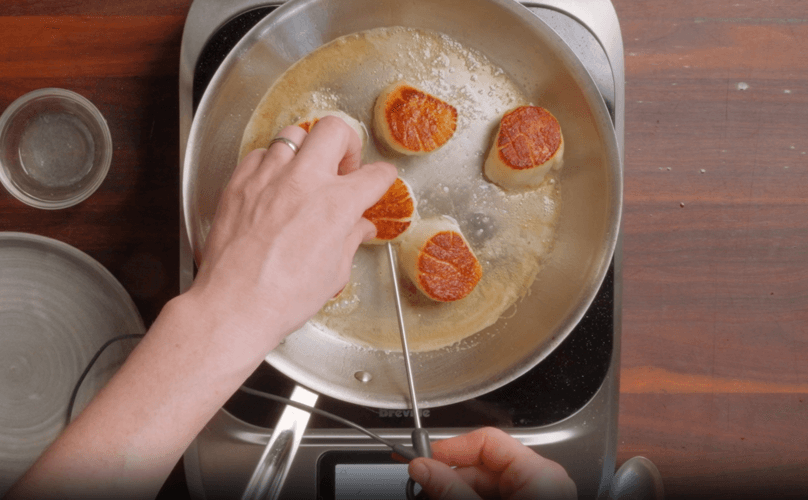
After confirming the cooker is turned on, place your induction compatible cookware on the cooking zone and choose your desired cooking mode. This differs by model: some ranges offer preset modes like boil and simmer, whereas others require you to manually select a temperature or heat setting.
#2 Cooking your food
While cooking with a new induction range may seem intimidating, many are pleasantly surprised by the results. Simply follow your recipe as you would with any other cooking method:
● Add your ingredients to the magnetic cookware
● Use the control panel to set the desired cooking temperature
● Monitor and adjust as necessary
It should be noted that induction ranges tend to heat up quicker than other methods. So you may need to flip your steak or toss your vegetables sooner than usual.
#3 Adjusting temperature levels and timer
This step will also depend on the model of the induction cooker you’re using. But no matter the model, all induction ranges have some way to adjust the temperature—be that a dial, a button, or a touchscreen.
Depending on its complexity, one button or dial may serve multiple functions. As before, referencing the manufacturer’s instructions may help.
Many induction stove ranges also have a timer feature, accessible through a menu or a secondary dial on the machine. As you experiment to see if it works, watch for countdowns on the display.
Tips for cooking with an induction cooker
The more you use and learn about your induction cooker, the easier it will become. Consider a few additional tips that might help:
● Be mindful of the glass surface. While sturdy enough to handle the rigors of cooking, it can still be vulnerable to scratches or cracks. Try not to drag full cookware across the glass surface, drop heavy objects on it, or use it as a cutting board.
● Let everything cook evenly. An induction cooker takes the guesswork out of trying to shift a pan’s position for even cooking. With electromagnetism, you simply need to set it down and let the induction cooker do its job.
● Mind the magnetism. While electromagnetic waves are harmless in themselves, they can damage sensitive electronics like cell phones or credit cards. They can also heat up any metal accidentally left on them, such as cooking utensils, which might become an unpleasant surprise.
With these tips handy, you can ensure your induction cooking is both an enjoyable and safe experience.
Maintenance and care for induction cookers
Maintaining an induction cooker is relatively simple compared to traditional gas or electric ranges, thanks to the absence of hot metal grates and burners.
That said, there are a few points to keep in mind to ensure your kitchen appliances remain in top condition:
● Wipe up spills promptly to prevent them from hardening on the cooktop. While food won’t burn on it as easily as with a gas or electric range, it can be difficult to remove if not cleaned quickly.
● Clean with a non-abrasive cloth to maintain the cooker’s smooth, glassy surface and prevent scratches. A damp, soft cloth is usually sufficient to wipe up spills.
● Be mindful of sensitive parts. Ensure the sensor remains clean, dry, and free from any oil build-up. If your induction cooker has dials, check if they are removable for easier cleaning.
With regular cleaning and mindful use, you’ll keep your cooker clean and pristine for many more meals to come.
Simplify your induction cooking with Breville
Learning how to use induction cooker technology opens up a world of culinary possibilities. By following these tips and guidelines, you'll quickly become adept at using your induction cooktop.
And with Breville's top-tier induction cookers, you'll be even better equipped to master this modern cooking method.
Breville’s Control Freak induction cooker simplifies the whole process with its advanced features, from a variety of preset functions to a user-friendly interface that makes it easy to select and adjust settings. For added capabilities fit for a home cook, like 4 cooking modes and an HD touch screen, try the Control Freak Home.
Discover the perfect induction cooker for your home kitchen by visiting Breville today.
Sources:
1. The Control Freak. Instruction Manual. https://www.breville.com/content/dam/breville/us/assets/miscellaneous/instruction-manual/commercial/CMC850-instruction-manual.pdf
2. Appliances Online. A beginner’s guide to induction cooking. https://www.appliancesonline.com.au/academy/ovens-cooking/cooktops-cooking/a-beginners-guide-to-induction-cooking/