In essence, a food processor embodies this very spirit—a versatile and diligent kitchen assistant poised to help you, the head chef, save your energy for crafting, plating, or hosting.
Whether you've recently welcomed a food processor into your kitchen or are considering adding one to your toolkit, join us as we uncover how to use a food processor and explore key tips on getting the most out of your personal sous-chef.
How do you use a food processor for the first time?
With an array of attachments, it's natural to be unsure of how to use a food processor effectively and fully experience the benefits of a food processor.
Fortunately, a food processor is quite similar to operating a blender, albeit with a few added features. The process generally involves four simple steps:
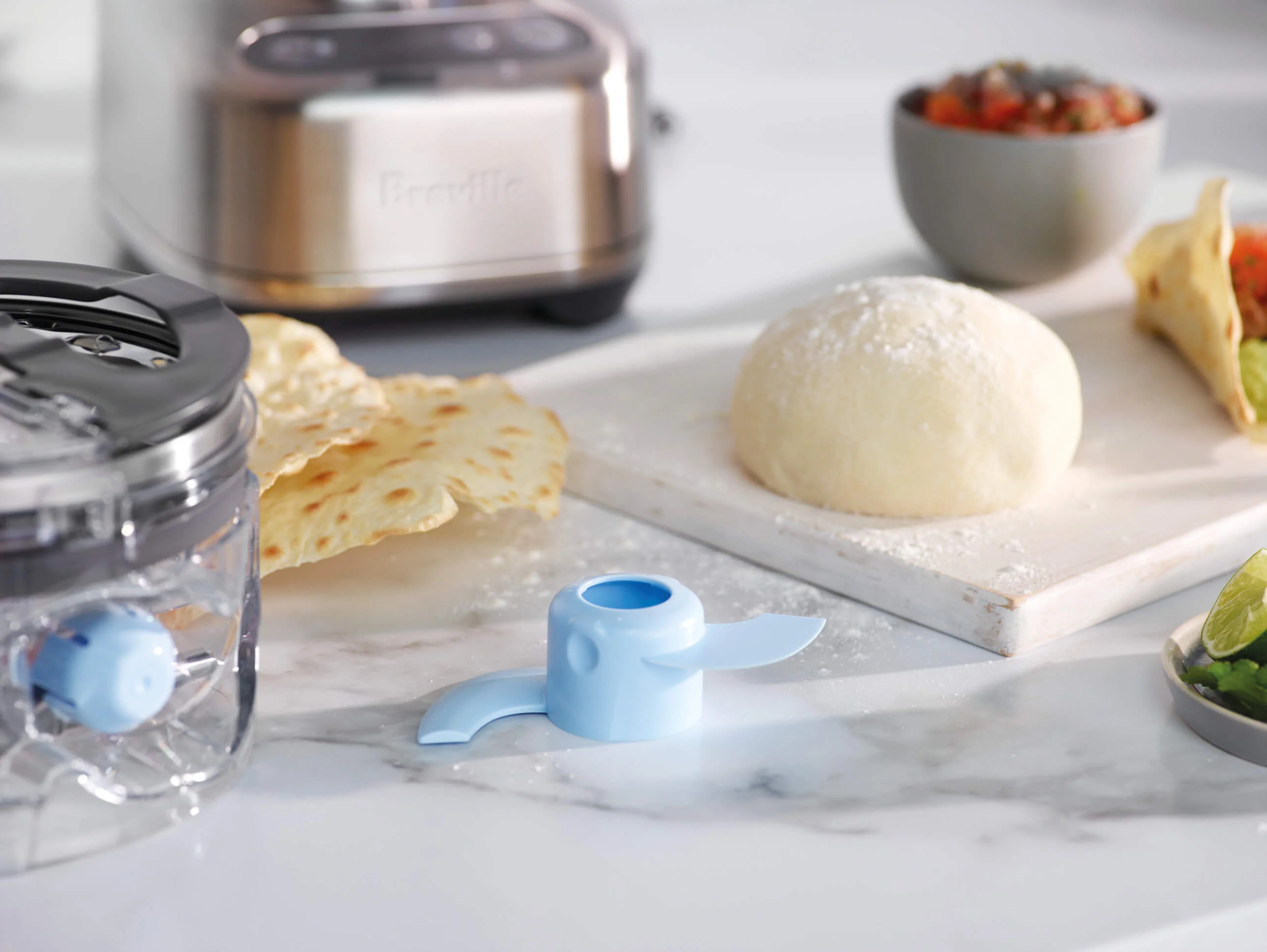
● Choose your attachment – Select the appropriate attachment for the task at hand—from disks built for slicing and shredding to stainless steel S-shaped blades for chopping.
● Add your ingredients – If your food processor has a large feed chute, you'll appreciate the convenience of not having to slice everything beforehand to make it fit.
● Select your blend setting – Tailor your selection to suit your recipe, whether it's a smooth run, a creamy purée, or a quick pulse. Consult your kitchen appliance's instructions to identify the ideal setting for your recipe.
● Clean up in a pinch – Detach the container or food processor bowl, rinsing it with dish soap and water in the sink. Wipe down the base with a damp cloth to remove any food residue. It’s that quick and easy.
What is the difference between a food blender and food processor?
Fundamentally, there is one key difference between a food processor vs. blender: Versatility.
While a blender focuses primarily on achieving silky purées and emulsions, a food processor’s diverse attachments offer a broader range of possibilities. Depending on the model, food processors can assist with:
● Smooth puréeing
● Rough or fine chopping
● Precise slicing, shredding, and grating
● Efficient kneading and mixing
This versatility makes the best food processor an invaluable partner for any home cook, offering multifunctionality not as often found in blenders.
Can a food processor be used as a blender?
Most of the time, a good food processor can be used as a substitute for a blender when needed. However, it's important to be aware of a few key considerations before doing so:
● Motor strength – Blenders are typically equipped with robust motors designed to effortlessly purée and emulsify solids into smooth textures. Your food processor will need a motor of sufficient power to achieve the same results. The functionalities of your blender depend on its specific motor type, such as an induction or universal motor.
● Desired texture – Many food processors prioritize chopping, slicing, and mincing. Before assuming your food processor can replicate a blender's texture, it's crucial to consult the manual to determine its capabilities—especially if you're aiming to prepare beverages or other recipes that require specific consistency.
● Blade attachments – Food processors have a variety of different attachments. These help accomplish kitchen tasks such as slicing and dicing. However, they won’t blend your food to a smooth consistency as a blender would.
If you’re not sure about your food processor's ability to serve as a blender, it may be best to consult the instruction manual. You may gain more insight into whether it can successfully execute the recipe you have in mind.
What to put in a food processor
With a better understanding of how to use a food processor, let’s consider some essential ingredients for your food processor recipes and ideas to help you unlock its potential:
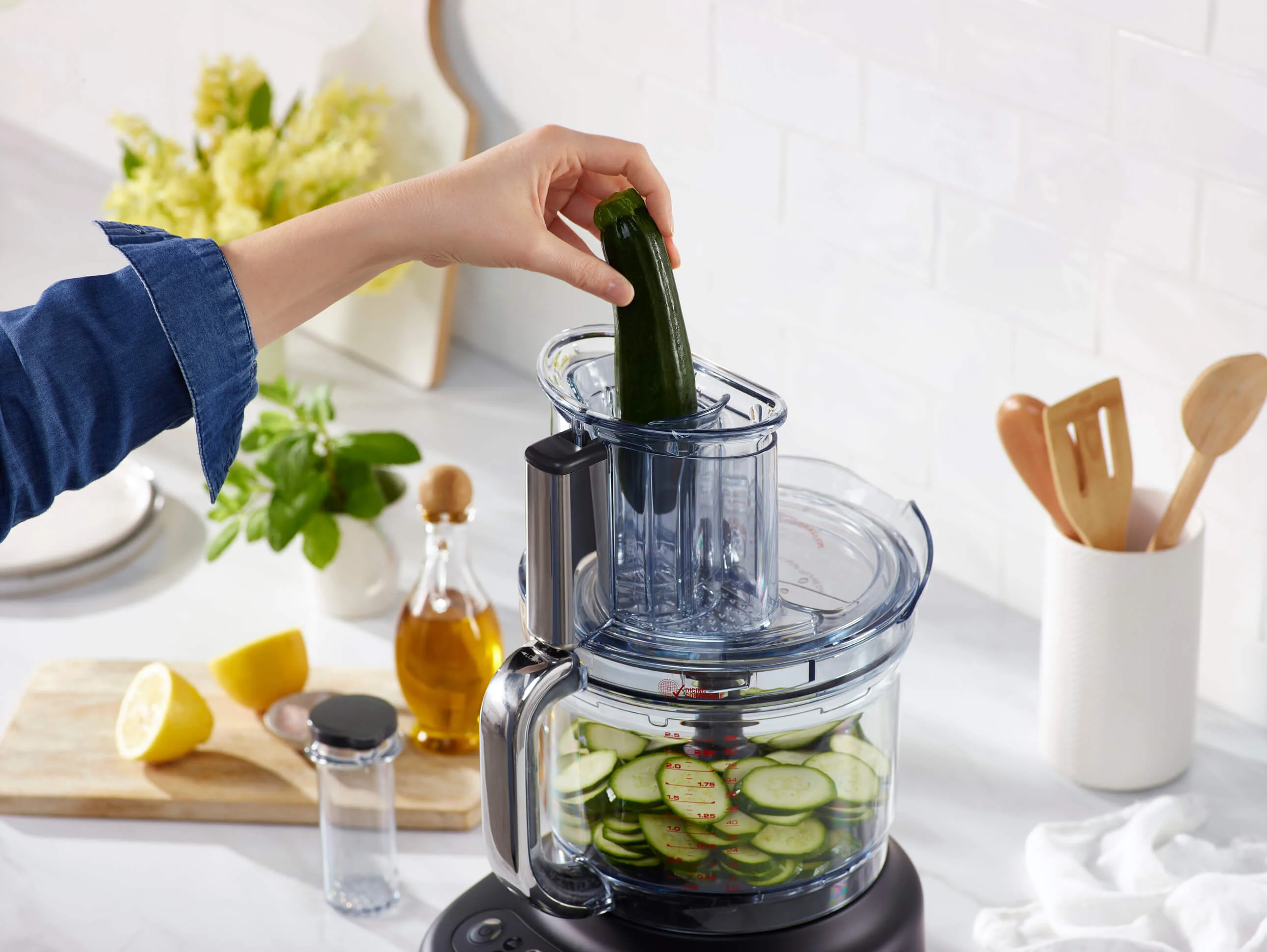
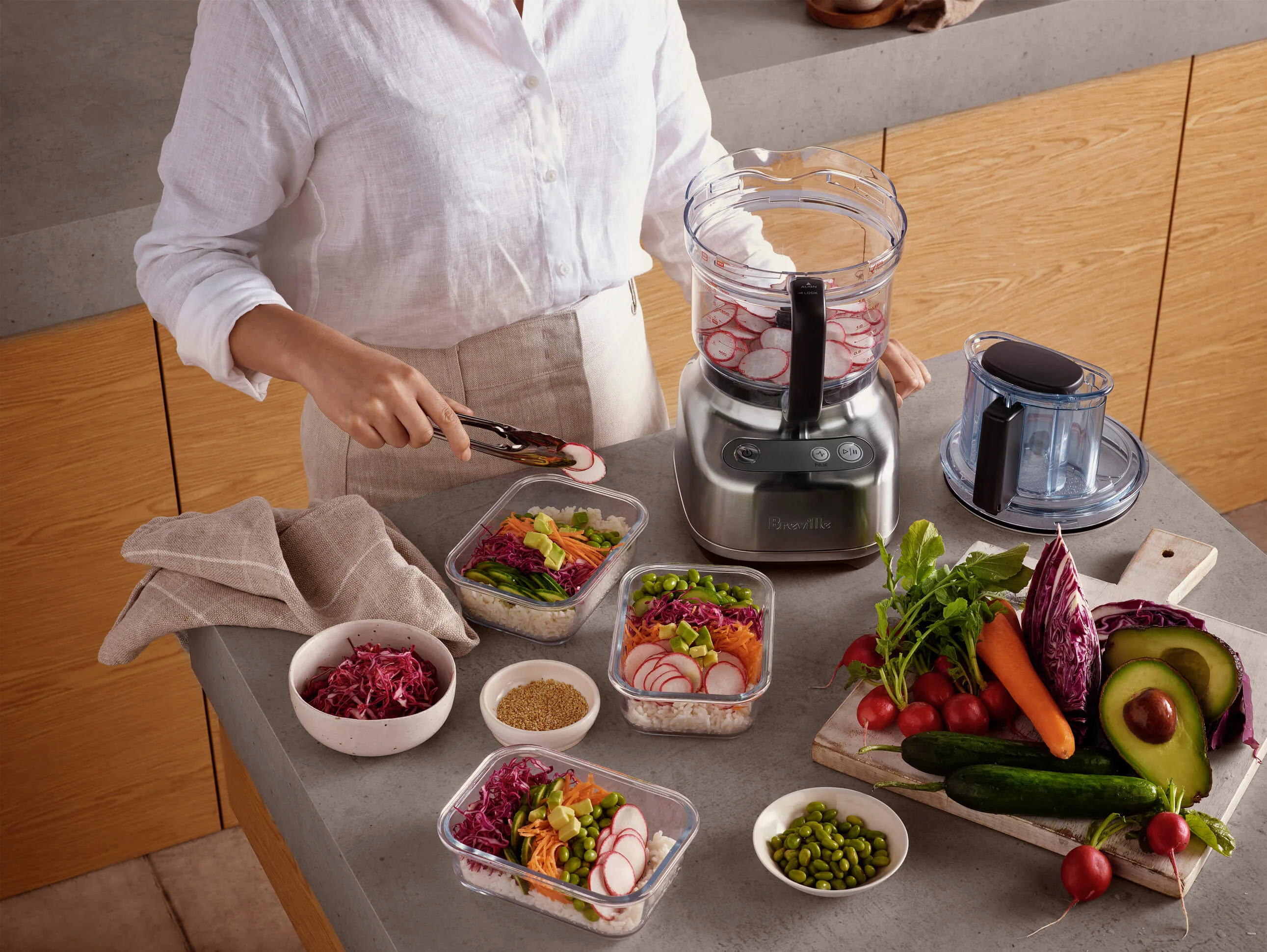
● Fruits and vegetables – From apples to zucchinis, effortlessly chop, slice, or shred a wide array of fruits and vegetables for a fresh salad or vibrant stir-fry. Plus, if your food processor has a dicing attachment, make quick work of fruits and veggies into uniform cubes and save time not having to dice by hand.
● Nuts and seeds – Whether you're making peanut butter, chopping almonds for baking, or creating your own spice blends, transform whole nuts and seeds into fine powders, coarse crumbs, or creamy pastes.
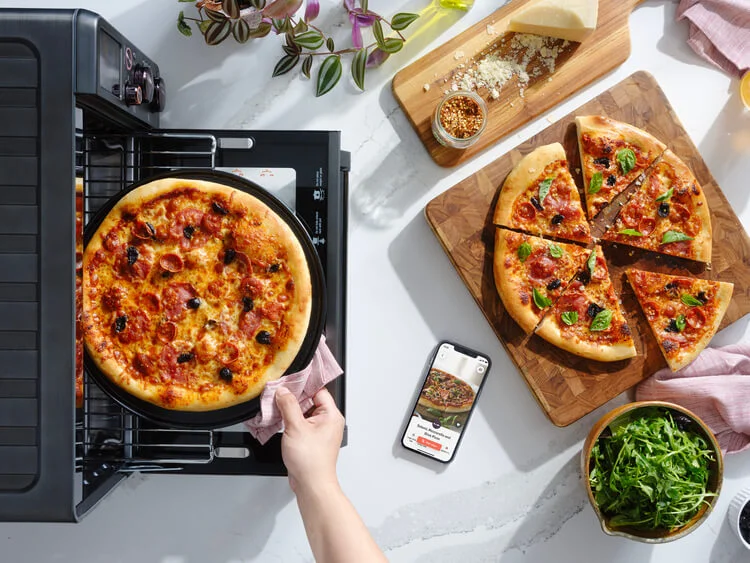
● Doughs and batters – Tired of kneading dough? A food processor not only saves you time and energy on laborious preparation, but it also ensures consistent dough for pizzas and pastries, or evenly textured batter for cakes, muffins, and pancakes.
● Sauces and dips – Blend cooked ingredients into velvety smooth sauces, emulsify dressings and vinaigrettes, and purée ingredients for dips and spreads like classic tomato sauce or creamy hummus.
These examples only scratch the surface of what a food processor can handle, delivering a whole new level of convenience, versatility, and efficiency to your kitchen appliances.
Find your food processor sous-chef with Breville
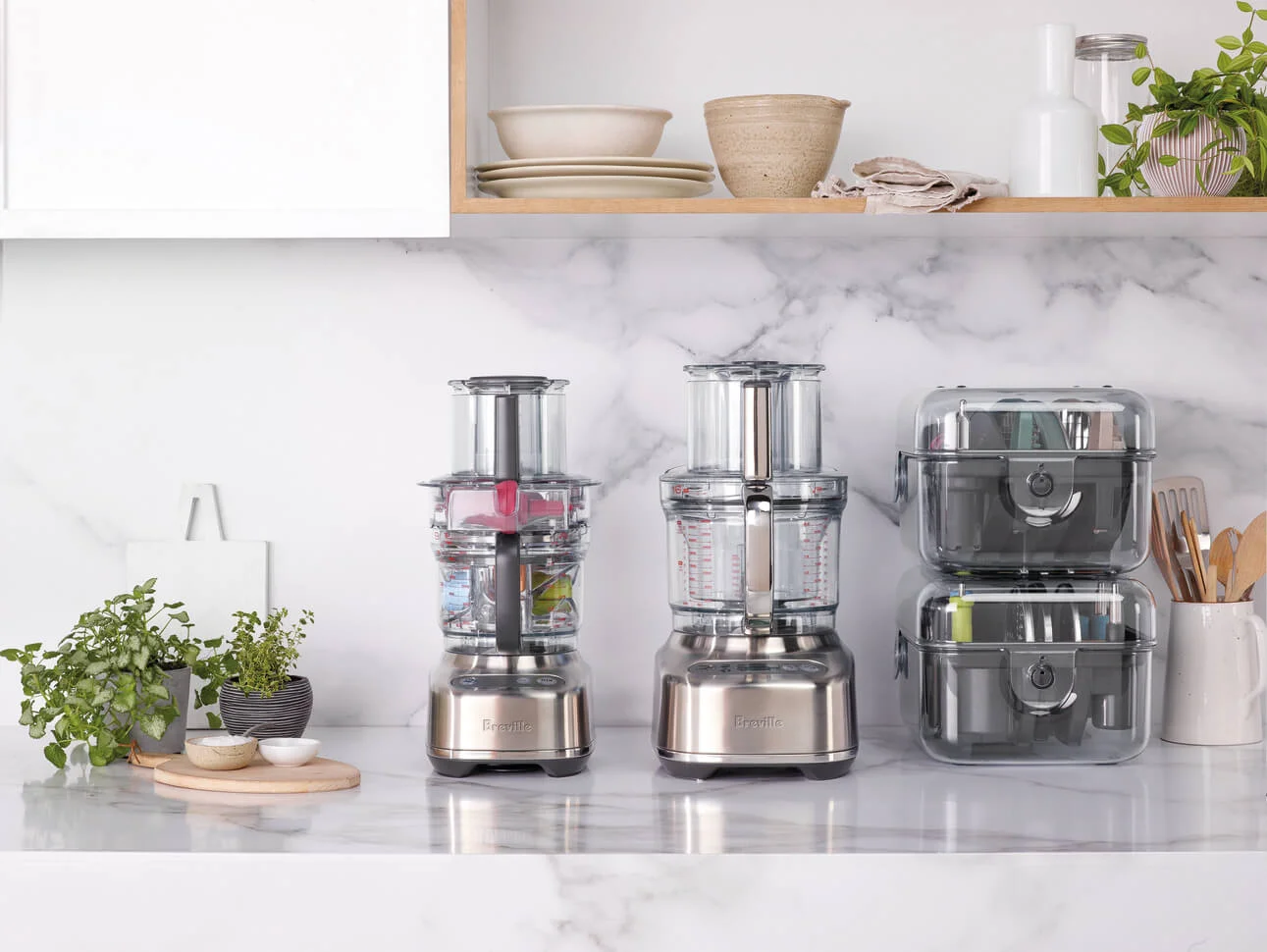
Envision a sous-chef capable of effortlessly dicing, slicing, and shredding ingredients to perfection in seconds. Now envision that same sous-chef compact enough to fit on your kitchen countertop.
A food processor from Breville is exactly that—the embodiment of durability and efficiency. Made with an induction motor, our food processors are longer lasting, highly durable, and specially designed for rougher jobs compared to universal motors that the rest of the market uses. Featuring a full-size feed chute to minimize prep time, an extended suite of blades and discs for precision dicing or shredding, and a heavy-duty motor for tougher kitchen tasks, the Breville Sous Chef 16 stands as a powerful yet whisper-quiet food processor. Plus, when you buy a Breville food processor, it comes with a guaranteed 30 year warranty.
As the head chef of your home’s kitchen, you deserve a kitchen appliance that can help you save time, conserve energy, and fully indulge in the joys of cooking.
Sources:
1. Foods Guy. Can You Make Smoothies In A Food Processor? https://foodsguy.com/make-smoothies-in-food-processor/
2. Something Swanky. A Beginner’s Guide on How to Use a Food Processor. https://www.somethingswanky.com/how-to-use-a-food-processor/